
Understanding Indoor Water Gardens
I set up a little water garden in a glass bowl with lucky bamboo and a few marimo moss balls. No soil, just a water change every two weeks and a turn so the bamboo grows straight. Zero fuss.
A clear glass vase is a stylish way to show these plants off, and Indoor water gardens fit in almost no space. They brings life and beauty to your home with surprisingly little effort.
Understanding Indoor Water Gardens
Water gardens bring nature in through plants that live fully submerged or with foliage at the surface. The mix of modern and traditional technique makes them a creative indoor upgrade.
Defining the Concept
True aquatics and semi-aquatics both work. Fully submerged types grow underwater, while water lilies float leaves and flowers on top. That variety lets you design something visually rich.
Inspiration and Benefits
These gardens are decorative and functional: a low-maintenance alternative to potted plants that also improves air and calm. They are a peaceful anchor for any room.
Essential Aquatic Plants
Picking the right plants brings the space to life. These aquatic species are beautiful and happy in water.
Madagascar Lace brings delicate, skeletal leaves and is easy from bulbs. Tiger Lotus offers multi-colored foliage that grows both ways and blooms often. Water Lilies are the classic floaters, and Brazilian Pennywort plus Water Lettuce fill in fast and easy.
Selecting Aquatic Plants
Choosing species that fit your space and skill level is the key to a thriving garden.
Identifying Suitable Species
Match growth habits to your setup. Madagascar Lace suits small spaces; Tiger Lotus adds versatile color. Check root development and nutrient uptake, since healthy roots signal a happy plant.
Caring for Bulb and Stem Varieties
Bulb plants like water lilies need a substrate to anchor roots, while stem plants train onto surfaces. Good soil provides the necessary nutrients for your plants and keeps the ecosystem balanced.
- Choose plants that fit your space and care level.
- Evaluate root health for plant well-being.
- Ensure proper substrate for root anchorage.
Container and Substrate Choices
The right container and substrate shape both looks and plant health.
Selecting the Right Glass or Ceramic Container
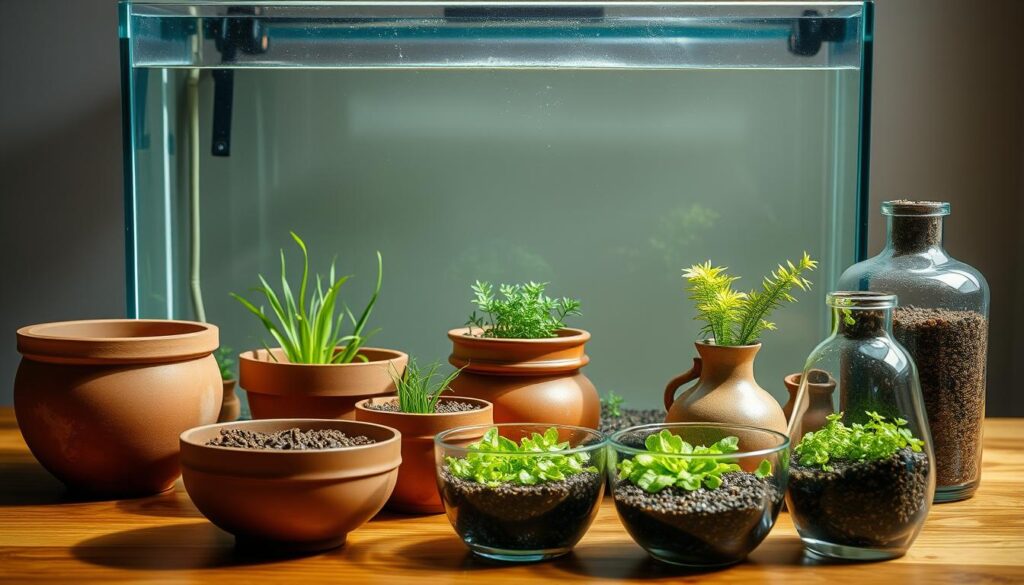
A clear glass or ceramic vase shows off the roots and adds a modern touch. Just make sure it is clean and contaminant-free before you plant.
Exploring Gravel, Sand, and Soil Options
A gravel layer stops soil from clouding the water. Sand makes a middle layer, and a formulated plant roots substrate feeds the plants.
- Start with gravel to keep soil separate and water clear.
- Add sand mixed with activated charcoal for a clean base.
- Use a high-quality water-plant soil for optimal growth.
Water Quality and Preparation
Clean water keeps plants vigorous and blocks algae and bacteria.
Filtering and Conditioning
Use filtered water; tap water’s chlorine and chloramines harm way you plant roots. Let water sit 24-48 hours or use an aquarium conditioner to neutralize them.
Temperature Considerations
Tropical species like 72-82 degrees; cold-water plants prefer 50-65. Watch temps in larger containers where swings hit harder, and recycle aquarium water for a nutrient boost.
Monitoring and Maintenance
Test pH, ammonia, and nitrate weekly, and do 10-20% water changes every 1-2 weeks to keep toxins down.
Lighting Solutions
Light drives healthy growth and good looks, whether from a window or a lamp.
Natural vs. Artificial Lighting
A sunny windowsill works, but LEDs give steady, low-heat light. The LORDEM Plant Halo is a favorite for its balanced spectrum and minimal heat.
Determining Optimal Light Duration
Most aquatics want 12-16 hours of light daily; too much invites algae. Timers keep the schedule steady.
Nutrient Management and Fertilizer
Fertilizer feeds the growth that keeps your garden vibrant.
Choosing the Right Fertilizer
Liquid fertilizers absorb fast for quick growers; root-tabs release slowly for deep roots. Fluval Stratum and activated charcoal support uptake and clarity.
| Fertilizer Type | Application Method | Benefits |
|---|---|---|
| Liquid | Dilute and apply directly | Quick absorption, promotes rapid growth |
| Root-Tab | Insert near plant roots | Slow release, supports deep root systems |
Integrating Gravel Layers for Bacteria
A gravel layer under sand and charcoal fosters beneficial bacteria that aid nutrient absorption and clear water.
Planting Techniques and Depth
How you plants to grow matters. Direct planting looks natural but gets messy; individual pots are easier to maintain but limit spread.
- Plant at the right depth; crown-formers sit slightly shallow.
- Use rocks to anchor until roots take hold.
- Space plants so roots are not crowded.
Creative Styling for Your Indoor Oasis
Turn the garden into a retreat with driftwood and moss for an organic feel. Framing the container edge with moss and mirroring plant colors pulls the whole look together.
Maintenance and Easy Care Tips
Simple routines keep the garden at its best.
Regular Water Changes and Cleaning
Swap 10-20% of the water weekly, wipe algae with a soft brush, and prune overgrowth so light reaches every leaf. Skip harsh chemicals.
Troubleshooting Common Issues
Algae, cloudy water, and stressed plants are the usual suspects; catch them early.
Controlling Algae and Water Clarity
Algae love excess light and nutrients. Cap light at 8-10 hours and use inhibitors, with regular water changes to stay clear.
| Cause | Solution |
|---|---|
| Excess Light | Reduce light exposure |
| High Nutrients | Use algae inhibitors |
| Infrequent Changes | Perform partial water changes |
Managing Plant Stress and Overgrowth
Wilting or discolored plants need proper light and nutrients. Prune the overgrown ones and keep levels balanced.
Incorporating Unique Elements and Accessories
Living accessories add function and charm to the ecosystem.
Integrating Snails and Other Beneficial Fauna
Ramshorn snails and Neocaridina shrimp keep algae and debris in check, while Otocinclus catfish add algae control. Acclimate them slowly and they thrive with minimal effort.
| Beneficial Fauna | Benefits | Care Tips |
|---|---|---|
| Ramshorn Snails | Control algae growth | Provide calcium-rich food |
| Neocaridina Shrimp | Consume debris, improve water quality | Maintain stable water parameters |
| Otocinclus Catfish | Eat algae, diverse benefits | Ensure proper water flow |
Designing with Seasonal Considerations
Seasons shift light and temperature, so adjust care. Winter means less light (add LEDs); summer means repositioning away from peak sun. Fertilize more in spring and summer, prune in fall.
Conclusion
Lucky bamboo, marimo moss balls, and pothos cuttings all grow happily in water indoors. Use filtered or dechlorinated water, change it every two weeks, and keep the container out of direct sun to dodge algae. Do that and you get a calm, living centerpiece with almost no work. Give it a shot! 💧