
How to Artfully Display Your Bonsai: Turning a Tiny Tree into a Statement
I caught the bonsai bug the day I realized a well-displayed tree stops being “a plant on a shelf” and becomes a whole scene. Displaying bonsai is part horticulture, part interior design, and a little bit of theater. You’re not just showing a tree — you’re framing a story. And honestly? It’s the most fun part of the hobby. 🙂
What Bonsai Display Means to Me
To me, display is where the work pays off. You can grow a flawless tree, but plonk it on a random coffee-table corner and it reads as clutter. Put it on the right stand with the right negative space and it reads as art. The difference is intention.
The Cultural Roots and Aesthetic Philosophy
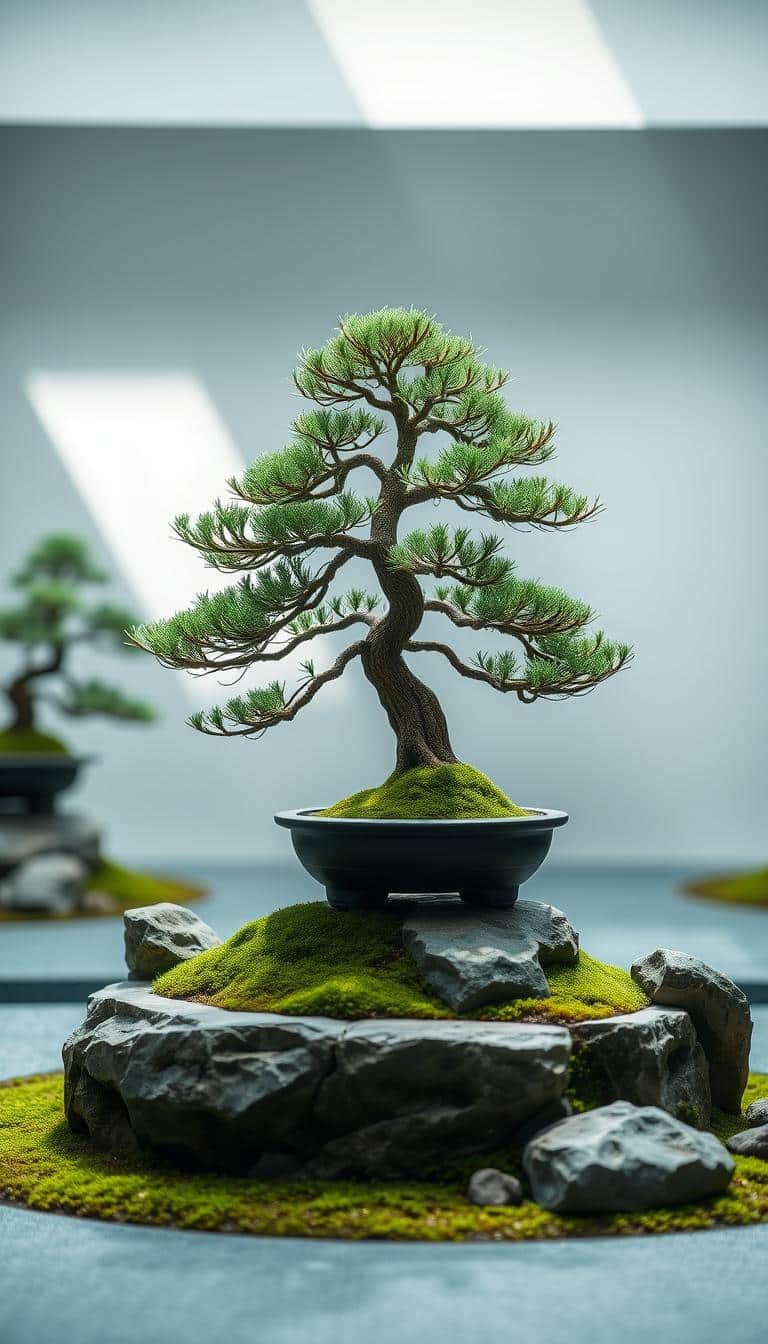
Bonsai display grew out of Japanese tokonoma alcove tradition — a dedicated niche that says “look here, this matters.” You don’t need a formal alcove, but you do need to decide the tree is the protagonist.
The Art and Practice of Displaying Bonsai
| Display Style | Key Features | Viewer Experience |
|---|---|---|
| Traditional Tokonoma | Minimalist, focused on simplicity | Creates a serene, contemplative atmosphere |
| Modern Exhibition | Dynamic, often with complementary elements | Engages the viewer with a broader artistic context |
Pick a style that matches your home. A tokonoma-style setup suits calm, uncluttered rooms; a modern exhibition vibe lets you get bolder with accents.
Choosing the Right Bonsai Tree for Display
Not every tree wants the same stage. A gnarled old juniper loves a rustic wooden stand; a sleek ficus looks sharp on something minimal. Match the mood of the tree to the mood of the setup.
Assessing Age, Health, and Proportions
A tree with great taper and proportion carries a display on its own. If the tree is leggy or unbalanced, fix that in training before you worry about the stand.
Matching Tree Style with My Vision
Decide the feeling first — calm, dramatic, whimsical — then choose pot, stand, and accents to support it. The tree leads; everything else follows.
Designing an Impactful Bonsai Composition
| Component | Traditional Style | Modern Style |
|---|---|---|
| Tree | Emphasizes natural form and age | Allows for creative styling |
| Pot | Simple, earthy colors | Bolder, vibrant colors |
| Stand | Wooden, minimalist design | Metal or glass for a sleek look |
The three-legged stool of display is tree, pot, stand. Get those in harmony and the composition sings.
Harmonizing the Tree, Pot, and Stand
The pot should flatter the tree, not fight it. A fiery red pot under a serene olive might clash; an earthy unglazed pot usually won’t. The stand lifts the whole thing to eye level — which is the point.
Integrating Scrolls and Accent Elements
| Element | Purpose |
|---|---|
| Scrolls | Provide cultural context |
| Accent Plants | Add color and texture |
| Decorative Items | Enhance the narrative |
A scroll behind the tree adds depth and story. A tiny accent plant at the base adds life. Keep it subtle — the tree stays the star.
Preparing and Conditioning Your Bonsai
Before display, the tree needs to look its best. That means a quick conditioning pass.
Pruning, Wiring, and Pest Management
| Step | Action | Purpose |
|---|---|---|
| 1 | Pruning | Shape and size control |
| 2 | Wiring | Branch shaping |
| 3 | Pest Check | Ensure health |
| 4 | Cleaning | Remove dirt |
| 5 | Final Adjustments | Enhance presentation |
Five steps, in that order. Prune and wire first, check for bugs, then clean the leaves so they catch the light.
Cleaning and Final Touch-Ups
Dust on leaves kills the magic. A soft brush with a damp cloth takes five minutes and transforms the tree.
Selecting the Ideal Bonsai Stand and Accents
Choosing the Right Material and Style
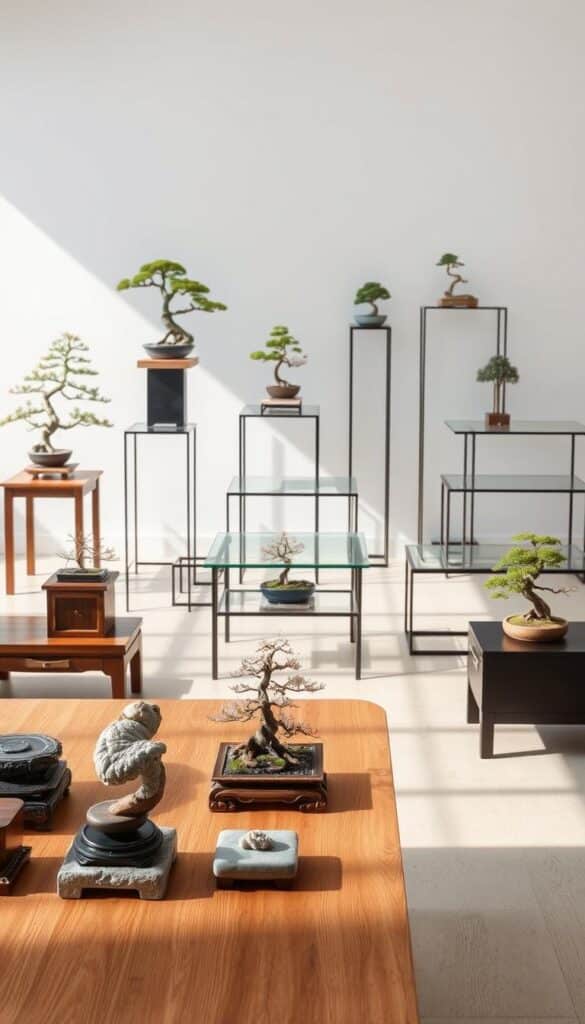
| Material | Traditional Style | Modern Style |
|---|---|---|
| Wood | Natural, earthy feel | Polished, sleek designs |
| Metal | Minimalist designs | Contemporary looks |
| Glass | Not commonly used | Modern, sleek appearance |
Wood reads warm and classic; metal and glass read modern. Match the stand to the tree’s personality, not your furniture.
Ensuring Stability and Proportionality
The stand should be roughly as wide as the tree’s canopy — not wider. A tiny tree on a massive slab looks lost. Stability matters too; a wobbling bonsai is a tragedy waiting to happen.
Curating Complementary Accent Elements
| Element | Purpose | Example |
|---|---|---|
| Accent Plants | Add texture and color | Moss, small succulents |
| Decorative Items | Enhance the narrative | Small stones, ceramic pieces |
| Minimalist Decor | Support visual impact | Simple scrolls, subtle lighting |
Accents fill the negative space without stealing the show. Moss, a stone, a small bonsai at eye level on stands that complement the tree — all fair game.
| Element | Role in Arrangement |
|---|---|
| Bonsai Stand | Central focal point, elevates the tree |
| Accent Pieces | Add context without distracting |
| Negative Space | Creates balance, prevents clutter |
The Bottom Line
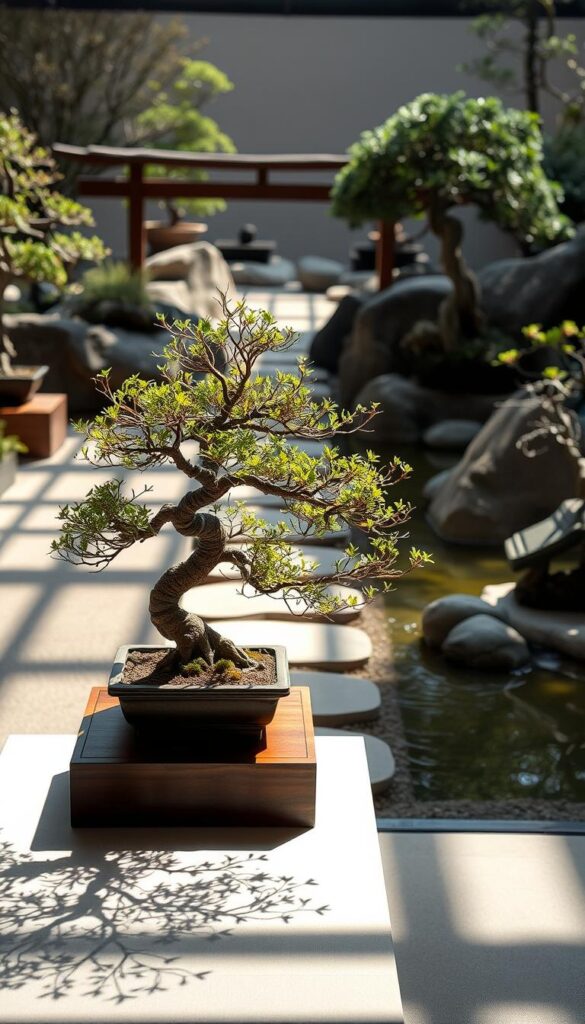
Artfully displaying your bonsai is about intention: pick a style, harmonize tree-pot-stand, condition the tree, and use accents to fill — not clutter — the space. Keep the tree at eye level and let negative space do the quiet work. So set yours up, give it a shot, and step back — you’ll see a tiny tree become a whole world. 😉