
Philodendron Pink Princess Care Guide: Keeping the Pink Popping
I bought a Philodendron pink princess after watching prices drop as tissue culture made it more available. The pink variegation varies by leaf and by plant — some leaves are mostly green, some are candy-pink, and that lottery is half the fun. A genuinely gorgeous indoor showpiece. 🙂
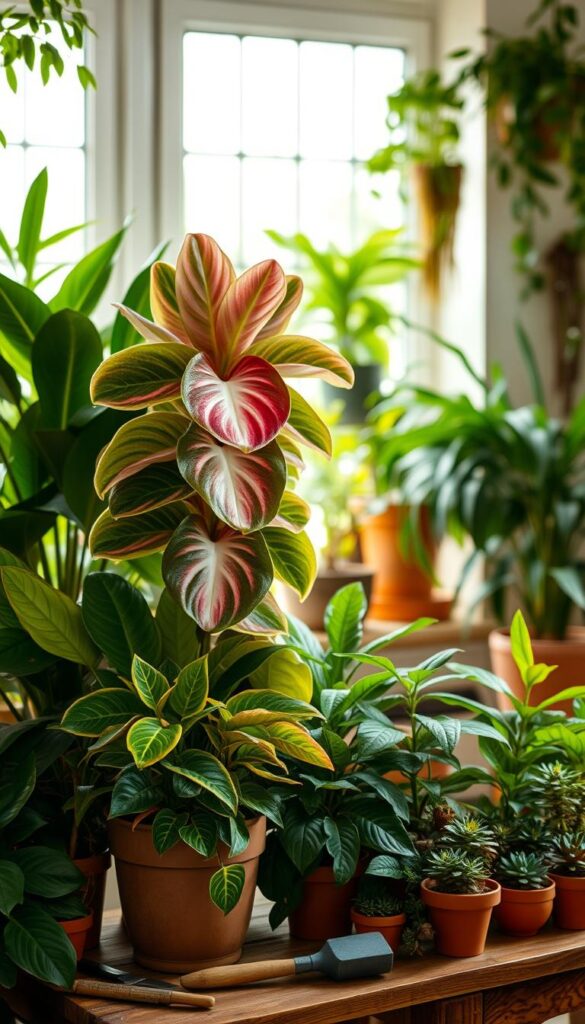
Why Pink Princess Steals the Spotlight
That variegation is genetic chimerism — pink tissue mixed with green. The trick is keeping enough pink without the plant reverting to all-green.
Light: The Secret to More Pink
Bright, indirect light drives pink. Too little and new leaves come out plain green. A grow light works if your window is weak.
Watering and Soil Basics
A chunky aroid mix and water when the top inch dries. Pink princess is a climber — give it a pole and it rewards you with bigger, better-variegated leaves. Watch for pests that target tender new growth. It’s a demanding but rewarding houseplant.
Humidity and Feeding
50%+ humidity keeps leaves lush. Feed half-strength monthly in season. The plant parent approach — steady, observant care — keeps variegation stable. For comparison, variegation and healthy foliage respond to the same light rules across species.
Troubleshooting: Reversion and Legginess
All-green leaves mean it needs more light — prune them to push variegated growth. Leggy stems? More sun and a pole. For the mindset, plant care is patience, not force.
When Things Go Sideways
If leaves crisp or drop, assess water and light first. Philodendron Pink Princess is a rewarding journey that brings its challenges, but it bounces back with the basics right.
The Bottom Line
The Philodendron Pink Princess care guide: bright light for the pink, chunky soil, water when dry, humidity, and a moss pole to climb. Keep the light high to avoid green reversion. IMO, it’s the most photogenic philodendron you can grow. So grab one, give it a shot, and let that pink do the talking. 😉