
The Desert’s Most Misunderstood Plant
I collected a piece of cholla cactus that had fallen on a trail in Arizona. Despite wearing thick gloves, the spines still found their way through. The plant rooted quickly in a pot of gritty mix and now sits on my patio producing new segments every summer.
These spiny survivors are notorious for their seemingly magnetic ability to attach themselves to passersby. I learned this the hard way during my first desert expedition!
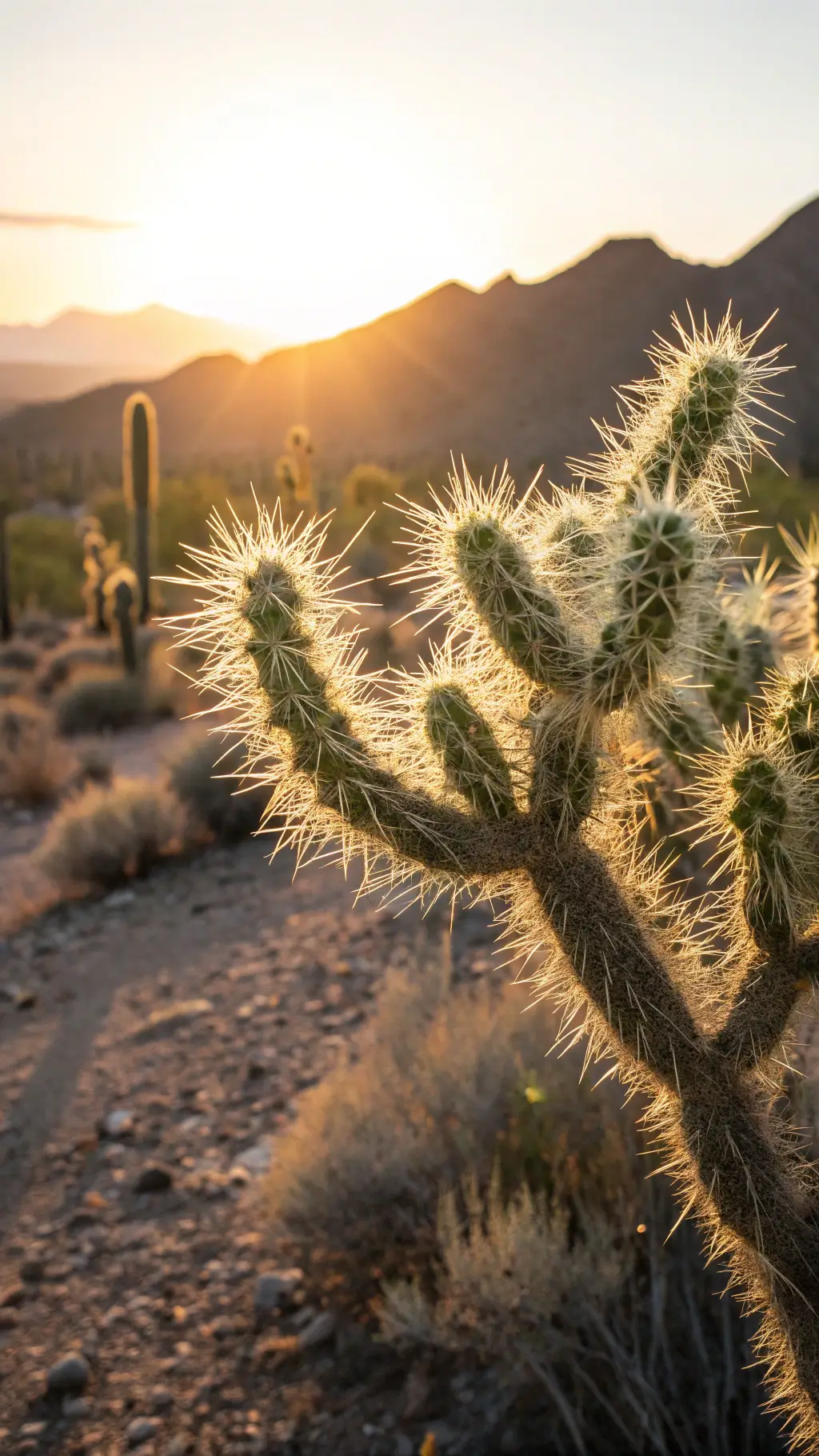
Meet the Cholla Family
Let me introduce you to some of the most common types I’ve encountered:
- Jumping Cholla (Cylindropuntia fulgida) – The infamous attention-seeker
- Teddy Bear Cholla – Don’t let the cute name fool you!
- Chain Fruit Cholla – Nature’s own Christmas ornament
- Buckhorn Cholla – The desert’s living sculpture
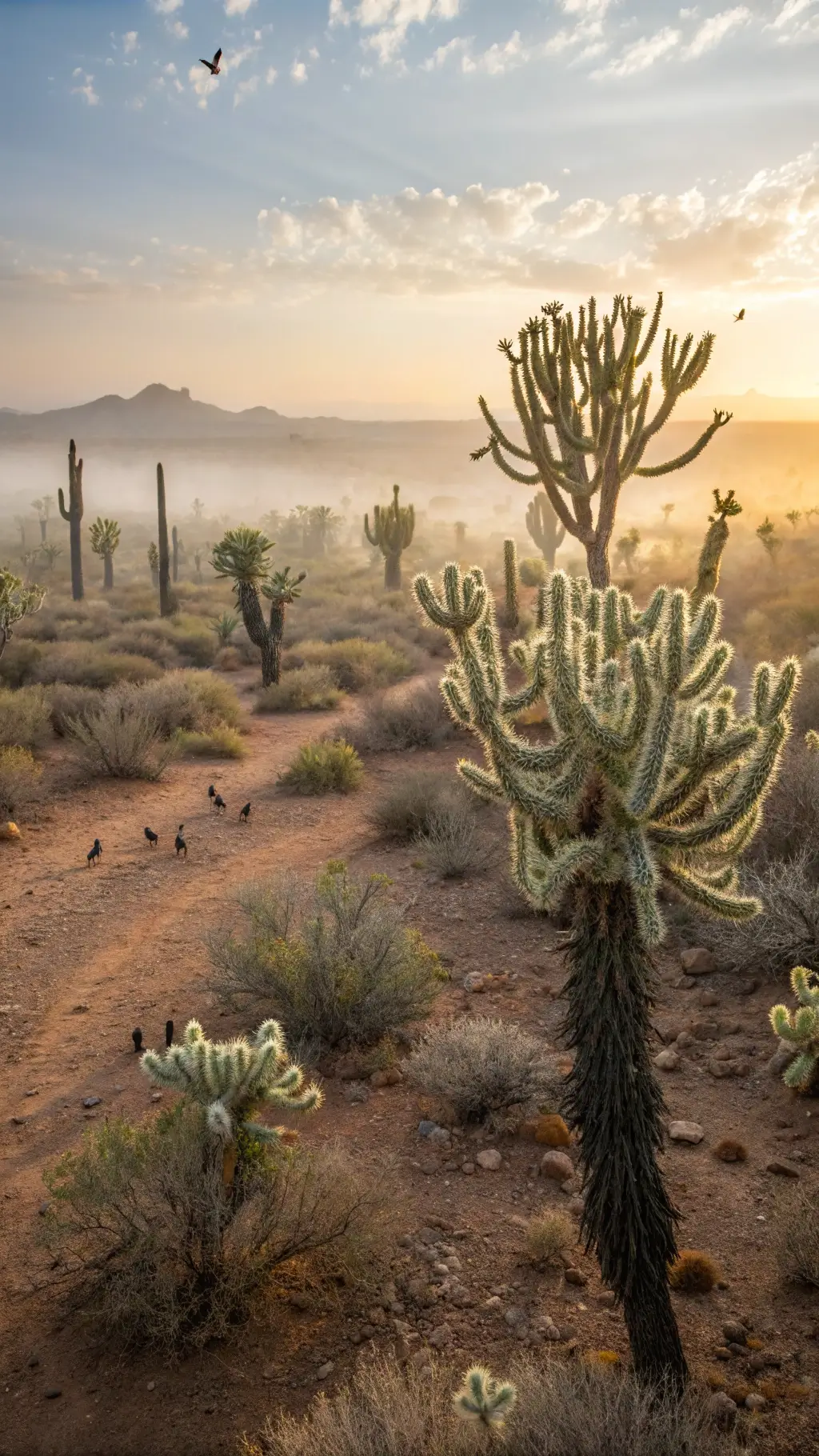
Living Large in the Desert
Here’s what makes these cacti absolute champions at desert survival:
- Height: Can grow anywhere from 3-15 feet tall
- Sun needs: Full sun exposure (they’re real sun worshippers!)
- Water requirements: Minimal (they’re the camels of the plant world)
- Soil preference: Well-drained (they hate wet feet)
Nature’s Security System
The cholla’s defense mechanism is nothing short of brilliant:
- Detachable segments that readily cling to anything that touches them
- Barbed spines covered in papery sheaths
- Multiple points of attachment that make removal challenging
Wildlife’s Best Friend
Despite their fierce appearance, chollas are surprisingly good neighbors:
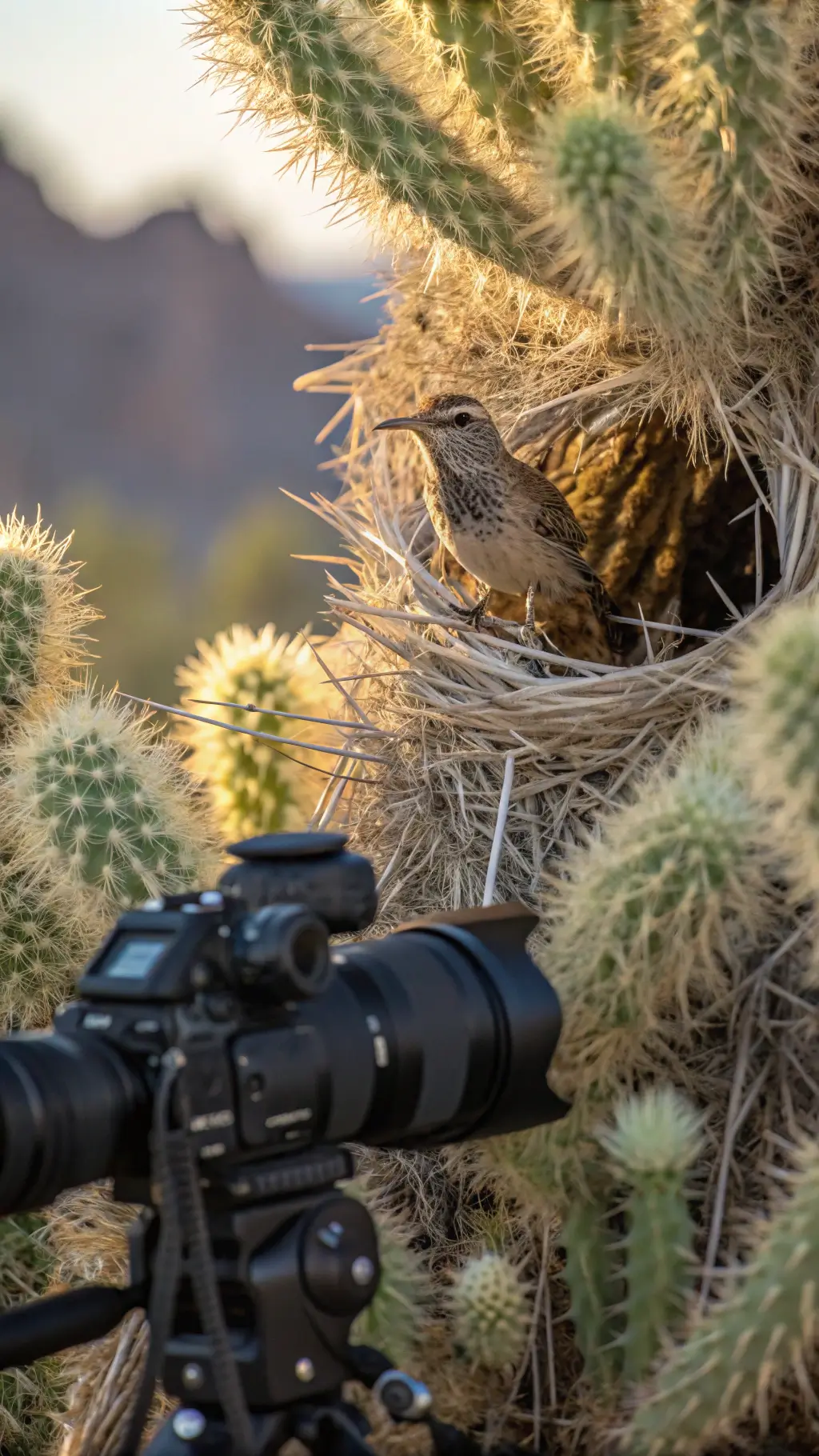
- Provide safe nesting spots for desert birds
- Offer shelter to small animals
- Create essential pollinator habitats
- Produce edible flower buds (though harvesting requires expert knowledge)
Safety First: My Top Tips
After years of desert exploration, here’s what I’ve learned:
- Never touch a cholla directly
- Keep a wide berth when hiking
- Carry a comb for emergency spine removal
- Wear thick-soled boots
- Keep pets on short leashes in cholla territory
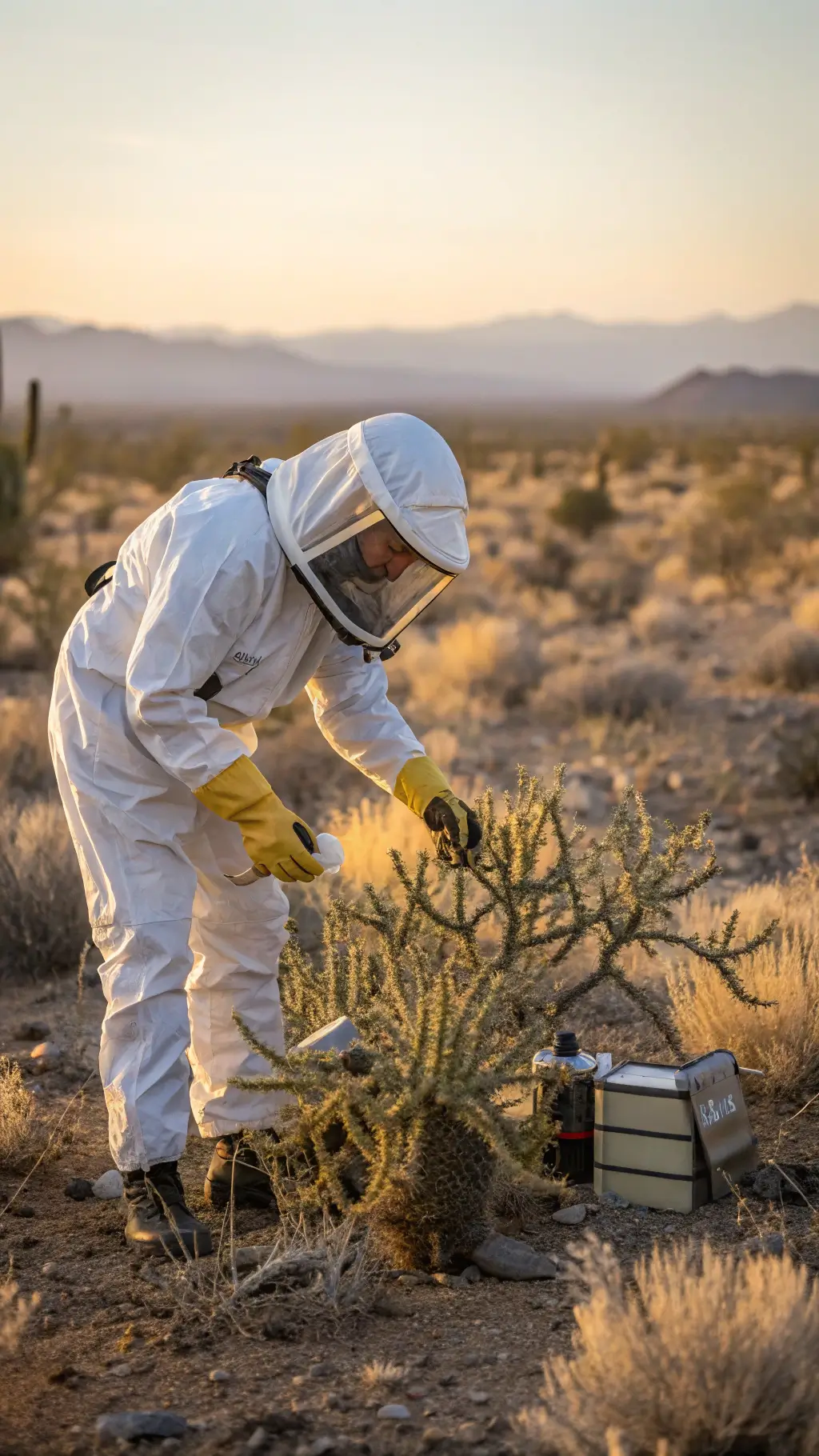
The Real Desert Survivor
These cacti aren’t just tough – they’re resilient innovators:
- Can reproduce from fallen segments
- Survive extreme temperature fluctuations
- Thrive in areas where other plants can’t
- Create their own microhabitats
Whether you’re a desert dweller or just fascinated by unique plants, the cholla cactus deserves your respect and admiration – from a safe distance, of course!
Remember: The best photos of cholla cacti are taken with a zoom lens. Trust me on this one! 🌵
Cholla cactus needs full sun and extremely well-draining soil. Handle with extreme care since the spines are barbed and difficult to remove. Water deeply in summer and keep dry in winter.