
Understanding Your Echeveria: Characteristics and Varieties
I started collecting echeverias after a friend gave me a single dusty rose variety. The symmetrical rosettes of thick, waxy leaves come in colors from pale green to deep purple, and propagating from leaf cuttings is almost foolproof.
My echeveria journey was trial and error. I quickly discovered that well-draining soil and minimal water are the keys to dodging root rot. It’s all balance, too much water harms, too little stresses. Four to six hours of direct sun keeps them vibrant.
What I love most is the decorative appeal. The rosette shape adds elegance to any room, and the color variety makes each plant unique. Keeping water out of the rosette avoids fungal issues.
Caring for these succulents is simple and rewarding. A few practical tips and you’ve got a thriving setup.
Key Features and Unique Traits
All echeverias share traits. They form compact rosettes of thick, fleshy leaves in colors from glaucous blue to soft pink. The rosette stores water, which makes them drought-tolerant, perfect for indoor bright spots.
My favorite part: they shift color with the seasons. In summer many push out small bell-shaped flowers that add another layer of pretty.
Popular Echeveria Species and Their Colors
Loads of species, each with its own charm. The Ghost Echeveria has a powdery blue-gray look. The Mexican Firecracker throws bright red and yellow summer flowers. Those differences shape how I place and care for each one. Some of the striking succulents out there share that drama.
Essential Echeveria Watering and Light Requirements
Water and light are the make-or-break pair. Balance is the whole game.
How Much Water Does My Echeveria Need?
I water only when the soil is completely dry. In the growing season that’s every 7-10 days with about a cup of water; in winter, once a month. A pot with drainage is non-negotiable.
Finding the Perfect Sunlight Balance
Echeverias want bright, direct sun, at least four to six hours. Near a sunny window keeps stems robust and colors vivid. I shift position by season to avoid burning.
Those two habits keep mine thriving. Attention beats routine.
Echeveria Soil, Fertilizer, and Temperature Guidelines
The soil and nutrients are the foundation. Get them right and the rest is easy.
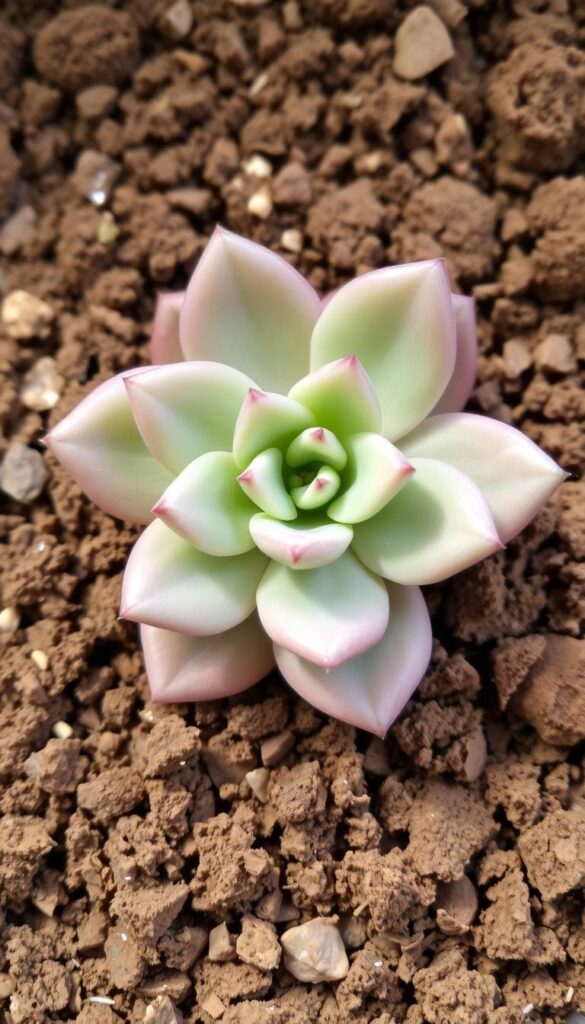
Choosing the Right Well-Draining Soil Mix
I mix regular potting soil, coarse sand, and perlite, roughly 50/30/20. That drains well yet keeps enough moisture to hydrate without drowning.
Fertilizing Wisely for Better Growth
During active growth I use a balanced, water-soluble fertilizer at half strength, once a month in spring and summer. Fall and winter, I stop so the plant rests.
| Component | Quantity | Benefits |
|---|---|---|
| Potting Soil | 50% | Retains moisture and provides nutrients |
| Coarse Sand | 30% | Improves drainage and prevents waterlogging |
| Perlite | 20% | Enhances drainage and aeration |
Right mix plus wise feeding builds a healthy echeveria. Monitor moisture and adjust.
Propagation and Pruning Techniques for Echeveria
Propagating and pruning are fun and keep the plant looking sharp.
Step-by-Step Guide to Propagation
I take leaf or stem cuttings, let them callous a few days, then set them on a well-draining mix. Water sparingly until roots show, usually weeks.
Pruning for Shape and Health
I pull dead or damaged leaves to block pests and trim leggy stems for a fuller look. Best done at the start of the growing season.
These steps keep mine looking their best with a little care.
Managing Pests, Diseases, and Maintenance in Echeveria
Echeverias are tough but not bulletproof. Here’s how I handle the usual troublemakers.
Identifying and Preventing Common Pests
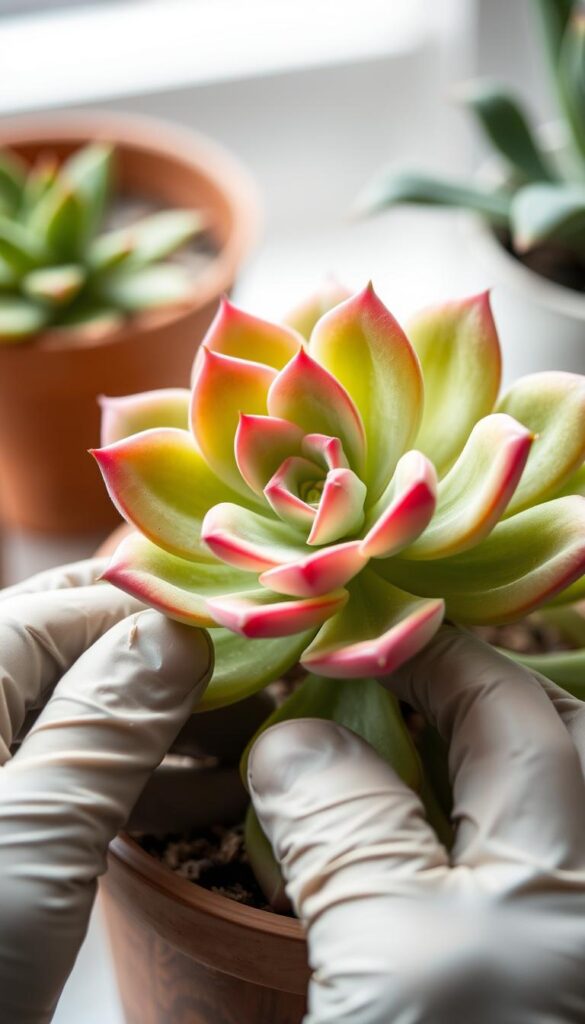
Fungus gnats, spider mites, and mealybugs show up now and then. I catch them early with insecticidal soap or neem oil weekly in the growing season.
Strategies to Avoid Overwatering and Rot
Overwatering brings rot. I check soil to the knuckle; dry means go. Good drainage holes prevent pooling. Soft stems or black spots mean stop, repot in dry soil, trim damage.
| Pest | Signs | Solution |
|---|---|---|
| Fungus Gnats | Small flies around soil | Insecticidal soap |
| Spider Mites | Webbing on leaves | Neem oil treatment |
| Mealybugs | Cottony spots | Isopropyl alcohol |
Regular maintenance, clearing dead leaves and weekly checks, keeps them vibrant.
My Journey and Final Thoughts on Thriving Echeveria Care
Looking back, their beauty lives in both resilience and the care they get. Consistent attention to soil, water, and light turns them into focal points.
One memory: mine stalled, then I realized they needed more direct sun. Moving them brighter brought out the blue hues overnight. Adapt care to each plant’s needs and you win.
For indoor growers, experiment with placement. These plants are forgiving, perfect for new and old hands alike.
The Bottom Line
Echeverias need bright light and well-draining succulent soil. Water when the lower leaves feel soft, and propagate by laying healthy leaves on dry soil until roots appear. Give one a shot, you’ll be hooked.