
Getting to Know This Unique Pitcher Plant
I still remember the first time a Heliamphora nutans caught my eye at a carnivorous plant show — the seller leaned over and warned me it likes things cool. These tubular pitchers with their little nectar spoon are equal parts elegant and slightly menacing. Let’s get into how to actually keep one alive without turning your living room into a swamp.
Meet the Marsh Pitcher Plant
The Heliamphora nutans was first described by Robert Schomburgk back in 1838, and it has kept botanists hooked ever since. It grows wild on the misty tepui summits of South America — think Mount Roraima and Kukenan — where cool, humid air is the daily norm. That ancestry is the whole game when you try to copy its conditions at home.
| Characteristic | Details |
|---|---|
| Pitcher Formation | Distinctive urn-shaped pitchers with vibrant colors |
| Natural Habitat | Cool, humid environments of tepui summits |
| Growth Pattern | Regularly divides and forms loose clumps |
| Light Requirements | Prefers partial light to avoid direct sunlight |
If you want the deep history lesson, this lecture on the marsh pitcher plants of the tepui mountains is a genuinely good watch:
Easy Care Tips and Growing Conditions
Light, Temperature, and Humidity Essentials
Lighting is the make-or-break factor. Bright, indirect light keeps this plant happy, while direct sun just scorches it. I run fluorescent plant lights on a 14-hour timer through the dim months, and that does the trick.
Keep daytime temperatures in the 65–80°F range with slightly cooler nights, and don’t let humidity drop below 50%. A pebble tray with water or a small humidifier solves the dryness problem fast. Cool and damp beats warm and dry every single time.
Soil, Water, and Terrarium Setup
Use a loose, well-draining mix built for carnivorous plants — that is the one non-negotiable. Water only with low-mineral stuff like rainwater or distilled water so you never build up salts in the pot.
A terrarium is the easiest win here. Lay sphagnum moss at the bottom for moisture, add your soil mix, and set the plant in without drowning the pot. A few habits keep it smooth:
- Use a clear container so light actually reaches the plant.
- Water sparingly — moist, never soggy.
- Crack the lid now and then for air circulation.
Screenshot the care cheat-sheet below; it’s the quick reference I wish I’d had on day one.
Features and Variants Worth Knowing
Distinctive Pitchers and That Sweet Scent
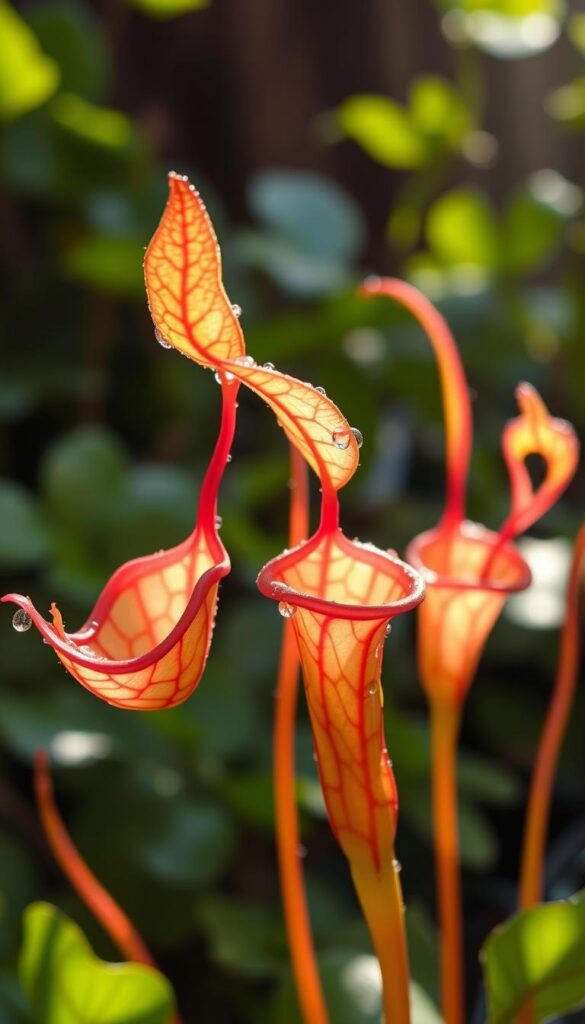
The pitchers are broad and relatively short, with a shape you won’t confuse for any other genus. The kicker is the faint sweet fragrance drifting off the rim — a pleasant surprise when you lean in close. Broad pitchers plus a sweet scent is your Heliamphora ID card.
Hybrids Like the Nutans Giant
If you want a showpiece, hunt down the Nutans Giant — a natural hybrid with Heliamphora glabra that pushes pitchers up to 10 inches tall. Serious collectors chase it, and honestly, I get why. Plants ship potted in sphagnum or a specialist mix, and the photo you see is representative since each specimen varies a bit.
What to Read and Watch Next
This grow guide on carnivorous plants indoors pairs perfectly with what we just covered:
Curious how it compares to its cousins? The pitcher plant and the broader world of pitchers are worth a look. And if you’re setting one up in your indoor space, start simple and build from there.
Conclusion
Heliamphora nutans wants cool, humid air, bright indirect light, and pure water — get those three right and it rewards you with the strangest, prettiest pitchers on the shelf. Give it a shot; your plant shelf could use a little menace. 🌿