
Exploring the Benefits of Growing Your Own Herb Garden
I keep a small basil plant under a grow light in my kitchen all winter, because the store-bought stuff wilts faster than my patience on a Monday. The homegrown version tastes stronger and sticks around for months if you harvest and feed it regularly. You don’t need a backyard either — a sunny windowsill or a countertop corner does the trick. Let’s dig into how you can keep fresh flavor on your plate every single month.
Why Grow Your Own Herbs?
Growing your own herbs is about more than skipping a grocery run. Fresh basil and mint take a plain pasta or a summer drink from “fine” to “where have you been all my life.” They also freshen the air a little and give you something green to fuss over when the city feels gray.
Fresh Flavor and a Calmer Kitchen
A few pots of parsley or chives turn weeknight cooking into something you actually look forward to. The smell alone makes the kitchen feel less like a utility room and more like a place to linger. Nurturing something living is a weirdly good reset after a long day.
- Fresh herbs like basil and mint add vibrant flavors to meals.
- They create a fragrant and visually appealing home environment.
- Herbs are nutrient-rich and offer healthier cooking options.
With a little care and the right spot, your herb garden can thrive, providing fresh flavors and beauty to your home all year round. If you’re new to keeping things alive indoors, start with our guide to indoor plants.
How to Start Your Indoor Herb Garden
Starting an indoor herb garden is less work than it sounds. Grab a bright, sunny spot with at least six hours of light a day and you’re already most of the way there. For the full rundown, check our indoor herb garden guide.
Picking the Spot and the Pot
Choose containers with real drainage holes so roots don’t sit in soggy soil. Pots 6–8 inches deep give the roots room to stretch and stay healthy. Skip the cute sealed ceramic without holes unless you want a science experiment in rot.
Light and Temperature Basics
Most herbs want bright, indirect light; if your place is dim, a grow light fixes it fast. Keep daytime temps around 65–75°F and pull plants back from heating vents and drafty windows. Water when the top inch of soil feels dry, and you’re golden.
Whether you’re a seasoned gardener or a total beginner, an herb garden is a forgiving place to start.
Container and Raised Bed Tricks
Containers and raised beds let you control the soil, which is half the battle with herbs. Get the drainage and watering right and the plants basically do the rest.
Soil, Drainage, and Watering
Use a quality potting mix with a handful of horticultural grit to keep water moving. Water when the top inch dries out, and never let the pot sit in a saucer of runoff. A balanced liquid feed now and then keeps things leafy.
Arrange your containers in a way that catches the most light, near a window or under grow lights. Regular pruning and harvesting keep the whole setup vigorous.
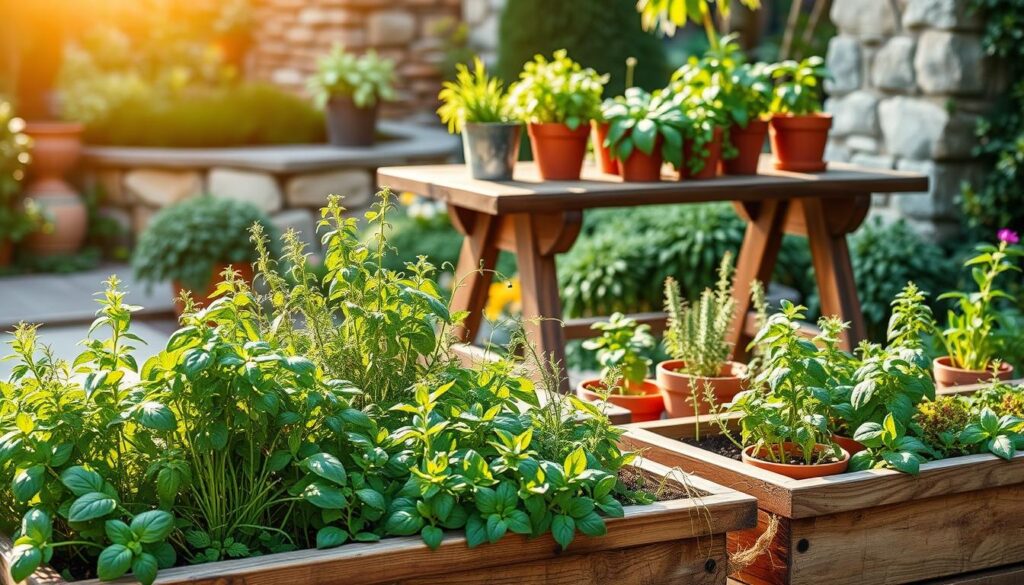
Herbs You Can Grow Year-Round
Some herbs pull double duty indoors and out, which is exactly what you want for a steady supply. These are the ones worth your counter space.
Indoor Staples: Basil, Parsley, and Chives
Basil loves a sunny indoor sill and brightens sauces, salads, and Caprese without breaking a sweat. Parsley brings a peppery lift to soups, and chives are brilliant on baked potatoes or deviled eggs. Give them drainage and a trim now and then and they’ll stay bushy.
Outdoor Favorites: Rosemary, Sage, and Thyme
Rosemary pairs with roasted anything, sage warms up stuffing, and thyme deepens soups and marinades. All three want full sun and well-drained soil, so they’re happiest outside. Prune regularly so they don’t get leggy and woody.
Caring for Your Year-Round Herb Garden
Keeping herbs productive is mostly routine once the system is in place. A few habits separate a sad windowsill from a thriving one.
Pruning, Harvesting, and Feeding
Pinch flower buds off basil and mint so the plant pushes energy into leaves instead of seeds. Feed with a half-strength water-soluble fertilizer during the growing season. Harvest often — it’s the best way to keep things coming back.
Pests and Disease
Watch for spider mites, mealybugs, and aphids, and isolate anything that looks off. A wipe-down with insecticidal soap or neem oil usually sorts it. Good air flow and not drowning the roots prevent most fungal trouble.
| Herb | Light Needs | Watering | Pruning |
|---|---|---|---|
| Basil | Bright, indirect light | Keep soil moist | Pinch off flower buds |
| Mint | Partial shade | Consistent moisture | Trim back after harvest |
| Sage | Full sun | Well-drained soil | Prune in spring |
By following these care tips, you’ll enjoy a bountiful and fragrant herb garden all year long. Consistent attention keeps your plants healthy and ready to rescue dinner whenever you need them.
Plan by Season for Nonstop Herbs
A little seasonal planning keeps flavor on your table through every month. Shift the routine as the weather shifts and the plants follow.
Spring and Summer
Spring is prime time to start or refresh your herbs with warm-weather picks like basil and mint. Summer means steady water and regular pruning so they don’t bolt and flower too soon. Keep the harvest going and the pots won’t quit.
Winter and the Indoor Move
When it cools off, bring tender herbs inside near a bright window or under grow lights. Ease off the watering and feeding since growth slows in the cold. Hardy rosemary and thyme can stay out in mild spots but appreciate frost protection.
Conclusion
A year-round herb garden is one of the easiest wins in gardening — fresh flavor, cleaner air, and a hobby that actually pays you back in pesto. Basil, mint, and chives handle indoor life like champs under a bright window or grow light, so harvest often and water when the soil feels dry. Give it a shot; your cooking will thank you. 🌿