
Practical Watering Techniques for Indoor Plants
I learned the ice-cube trick from a florist after I drowned my first orchid’s roots. A cube melts slowly and lets the bark mix drink without pooling — small win, big difference.
Real houseplant parents shared the tips below through Birds & Blooms, and they’re backed by science, not just vibes. Watering tops the list: the soil should be moist, not soggy, and the rhythm depends on the plant. Some plants prefer their soil to dry out fully between drinks, while others want steady moisture. By following these tips you’ll build a thriving indoor space that brings freshness home.
Using Ice Cubes for Slow, Even Watering
Drop an ice cube on the soil and it releases water gradually — perfect for hanging plants that dry out fast. Roslyn Francis swears by it for busy weeks, and Lisa Sherman says it kept her ferns hydrated without soggy soil.
Repurposing Cooking Water for Nutrients
Water from boiling veggies or eggs is loaded with minerals. Let it cool, then pour it on the soil — an eco-friendly feed that skips harsh chemicals. Great for herbs and flowering plants, and it cuts kitchen waste.
- Let the water cool completely so you don’t burn roots.
- Use it on plants that like extra nutrients, like herbs.
Houseplant Hacks You Need to Know
Small upgrades prevent the big problems — overwatering, nutrient gaps, the usual suspects.
A Moisture Meter Changes the Game
Tracy McCullum credits her moisture meter with saving her plants from root stress. Measure before you water and you’ll stop guessing.
Coffee Grounds and Eggshells
Used coffee grounds boost nitrogen and drainage; crushed eggshells add calcium for healthy roots. Dolores Koland says her plants “never looked greener.”
The 10-10-10 Fertilizer Rule
A balanced 10-10-10 feed once a month in the growing season — ease off in winter — keeps plants fed without overdoing it.
| Hack | Benefits | Application |
|---|---|---|
| Moisture Meter | Prevents overwatering, reduces root stress | Check soil moisture before watering |
| Coffee Grounds | Boosts nitrogen levels, improves drainage | Mix 1/4 cup into top soil monthly |
| Eggshells | Provides calcium, prevents root burn | Crush 2-3 shells, mix into soil |
| 10-10-10 Fertilizer | Balanced nutrients for growth | Apply once a month, less in winter |
Creative Placement and Lighting
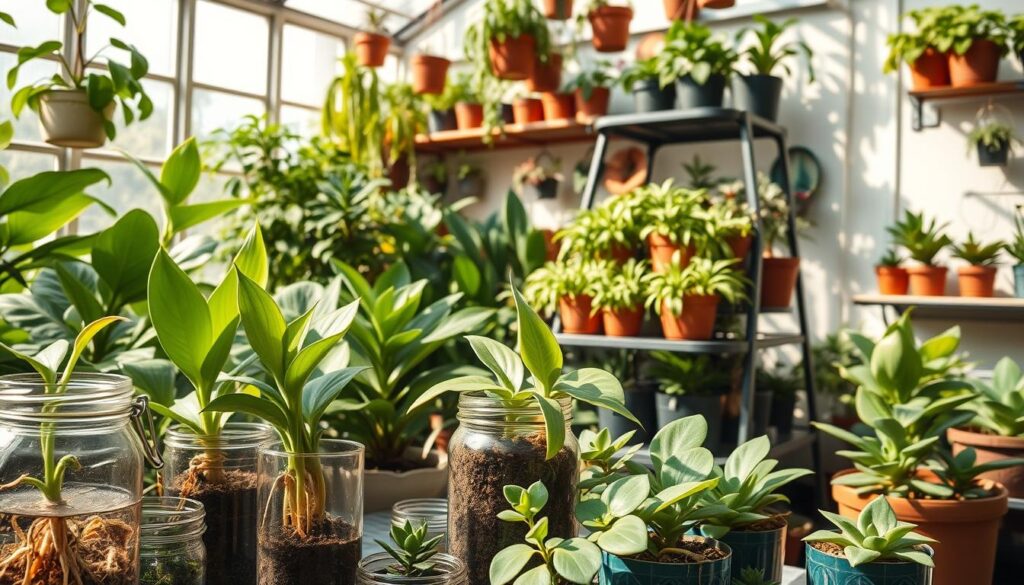
Hope Cate parks a sofa table in front of a south window to make both sunny and shady zones — ferns and peace lilies up front, Chinese evergreen in the shade. On dim days, grow lights 6–12 inches above the foliage deliver 12–14 hours of simulated daylight. Snake and spider plants love it.
Rotation and Humidity
Plants lean toward light, so a weekly quarter-turn keeps them even and full. For humidity, set pots on a gravel tray of water — evaporation does the rest. Aim for around 50%.
| Technique | Benefits | Application |
|---|---|---|
| Weekly Rotation | Promotes balanced growth | Rotate plants 1/4 turn each week |
| Gravel Tray | Increases humidity | Place pot on gravel over water |
Bringing It All Together
A thriving indoor garden is just smart tricks plus steady care. Mix ice-cube watering with cooking-water feeds, rotate weekly, and run a gravel tray for humidity — especially for tropicals. In winter, back off on water and fertilizer but watch the humidity. If you’re new to all this, our garden guide is a friendly place to start.
Conclusion
Simple hacks — ice cubes for orchids, pebble trays for humidity — make care easier and dodge expensive mistakes. Start with one trick, then layer on more as you go. Your plants will thank you, so give it a shot! 🌱