
My Journey with the Silver Leaf Philodendron
If you’ve been eyeing a Philodendron Brandtianum, here’s the no-nonsense version of what actually works. Below I walk through the care, the gotchas, and the few habits that keep it happy.
I bought Philodendron brandtianum because the leaves have a pattern that looks like brushed silver on olive green. Unlike some silver philodendrons that fade in low light, the pattern on brandtianum stays visible even in moderate conditions.
This plant, with its striking silver-variegated leaves, has captured the hearts of many indoor gardeners. Whether you’re a seasoned plant enthusiast or just starting your green journey, this guide is here to help you unlock the full potential of your Philodendron Brandtianum.
In this article, we’ll dive into important aspects like light, water, and soil to make sure your plant does well. Plus, we’ll cover important safety tips due to its toxicity, making it safe for your home.
Here’s what you can expect to learn:
- How to give the perfect environment for yourPhilodendronBrandtianum
- Watering tips to keep your plant healthy and happy
- The best soil recommendations for best growth
- How to handle the plant safely
By the end of this guide, you’ll be well-equipped to give your Philodendron Brandtianum the care it deserves. Let’s get started!
My journey with the Silver Leaf Philodendron began when I first laid eyes on its striking, silver-variegated leaves. It was love at first sight!
Early on, I learned valuable lessons about watering schedules and the importance of soil quality. These factors a lot impacted the plant’s health and appearance.
One of the biggest challenges I faced was dealing with yellowing leaves. I discovered that overwatering was the culprit, and adjusting my watering routine made a world of difference.
Another issue was slow growth. I found that increasing humidity levels and paying closer attention to root care helped stimulate healthy growth.
These experiences taught me that even small adjustments can have a big impact on the plant’s well-being. It’s been a journey of trial and error, but it’s made me a better plant parent.
| Challenge | Solution | Result |
|---|---|---|
| Yellowing Leaves | Adjusted watering schedule | Healthier foliage |
| Slow Growth | Increased humidity and improved root care | Steady, vibrant growth |
Exploring the Plant’s Natural Habitat and Origins
The Philodendron Brandtianum traces its roots to the lush tropical forests of South America, specifically in countries like Colombia, Brazil, and Bolivia. This plant does well in environments with warm temperatures and varying light levels, from dappled sunlight to shaded areas.
Native Regions and Botanical History
In its natural habitat, the plant grows as an epiphyte, climbing up trees to reach indirect light. The seasonal rains in these regions make sure enough moisture, while the forest floor gives excellent drainage, stopping waterlogged soil.
Unique Features of the Silver Leaf Philodendron
What sets this plant apart is its striking silver-variegated leaves and climbing habit. These features are adaptations to its wild environment, where competition for light and resources is fierce. The plant’s ability to do well in well-draining soil with filtered sunlight makes it a resilient choice forindoorspaces.
| Native Region | Climate Conditions | Plant Adaptations |
|---|---|---|
| Colombia | Tropical, high humidity | Climbing habit, silver leaves for light reflection |
| Brazil | Seasonal rains, warm temperatures | Epiphytic growth, efficient drainage |
| Bolivia | Varied sunlight patterns | Strong root system for nutrient absorption |
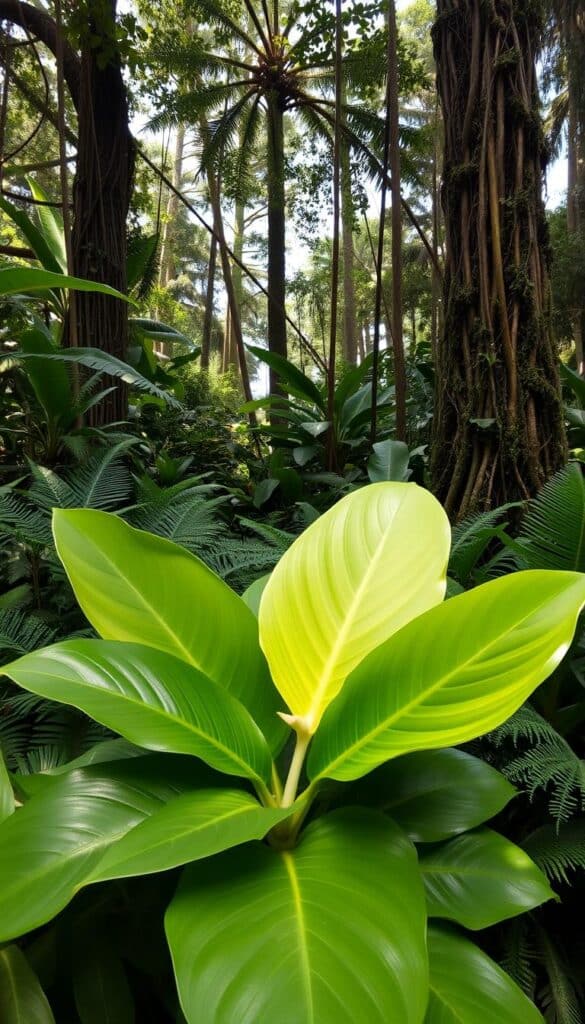
Essential philodendron brandtianum care guide for Thriving Plants
Creating a doing well environment for your silver leaf philodendron starts with the right tools and a steady routine. Here’s how I make sure my plant stays healthy and vibrant.
Tools and Materials
To begin, you’ll need a few important tools. A well-draining potting mix, preferably a 3:1 soil-to-perlite blend, is key. Watering when the top inch of soil is dry stops root rot, a common issue. I also recommend using a humidifier to keep best moisture levels, especially in drier climates.
Establishing a Care Routine That Works for Me
My care routine includes monthly checks for any signs of rot or nutrient deficiencies. During spring, I focus on fertilization to support new growth. A balanced, water-soluble fertilizer applied every four weeks works well. I’ve noticed even minor adjustments, like increasing humidity or adjusting watering schedules, can make a significant difference in the plant’s health.
By following these simple tips and keeping a watchful eye for potential issues, you can enjoy a doing well silver leaf philodendron all year round.
Optimizing Lighting, Watering, and Humidity
Creating the perfect environment for yourhouseplantinvolves balancing light, water, and humidity. These elements are key for the health and beauty of your silver leaf philodendron.
Choosing Bright, Indirect Light
Theideal spot for your plantis near a window with filtered sunlight. Direct sunlight can cause the leaves to become scorched, while too little light may slow down growth. East- or west-facing windows are perfect for providing the right amount of indirect light.
A bright environment with filtered light makes sure your plant stays vibrant. If natural light is scarce, consider using grow lights to supplement the lighting needs of your houseplant.
Timing My Watering for Healthy Roots
Watering is an art when it comes to your silver leaf philodendron. Overwatering can lead to root rot, so it’s key to let the top inch of soil dry out between waterings. Use a pot with good drainage to stop waterlogged soil.
Humidity levels also play a role in the plant’s condition. To keep the right environment, you can place the pot on a tray filled with water and pebbles or use a humidifier. This helps keep the surrounding air moist without overwatering the plant.
| Lighting Condition | Spot Recommendation | Environment Benefit |
|---|---|---|
| Bright, Indirect Light | Near an east- or west-facing window | Promotes healthy leaf growth and color |
| Filtered Sunlight | Behind a sheer curtain | Prevents leaf scorch while maintaining vibrancy |
| Low Light | Supplement with grow lights | Ensures adequate light for photosynthesis |

| Watering Technique | Frequency | Benefit |
|---|---|---|
| Check soil moisture | Water when top inch is dry | Prevents root rot |
| Use well-draining pot | Water thoroughly, allowing pot to drain | Maintains healthy roots |
| Humidity maintenance | Daily or as needed | Supports overall plant health |
By carefully selecting the right spot and keeping proper watering and humidity levels, you can create an ideal environment for your silver leaf philodendron to do well.
Soil, Fertilizer, and Repotting Best Practices
When it comes to nurturing your plant, the right soil and nutrients make all the difference. A well-balanced approach makes sure your plant stays healthy and does well year-round.
Creating a Rich, Well-Draining Soil Mix
A 3:1 soil-to-perlite blend is ideal for stopping moisture buildup and root rot. This mix allows roots to breathe, making sure healthy growth and vibrant leaves.
Fertilization Tips for the Growing Season
During spring and summer, use a balanced fertilizer every four weeks. Reduce fertilization in winter as growth slows down. Monitor leaf and stem health to catch any nutrient deficiencies early.
- Create a fertile mix with 3 parts soil and 1 part perlite to avoid waterlogged soil.
- Fertilize monthly during the growing season for robust growth.
- Check leaves and stems often to make sure proper nutrient levels.
- Repot every 1-2 years in spring to refresh the soil and give more space.
- Maintain steady moisture without overwatering to support overall health.
Propagation and Supporting Climbing Growth
Propagating your silver leaf philodendron and providing the right support can be incredibly rewarding. This section will guide you through effective methods to multiply your plant and help it reach new heights in your home.
Water Propagation vs. Soil Propagation Techniques
When it comes to propagation, there are two popular methods: water and soil. For water propagation, I’d go with using a glass jar to monitor root development. Simply place the cutting inwater and wait until roots growabout 1-2 inches long. This method allows me to track progress visually, making sure healthy growth before planting.
Soil propagation involves planting the cutting directly into a well-draining mix. Keep the soil moist but not waterlogged. This method is great for those who prefer a more traditional approach. Both techniques work well, but water propagation gives me a clearer view of root progress.
Using Moss Poles and Trellises for Support
Your leaf philodendron is a natural climber, doing well when given proper support. Moss poles and trellises are excellent options. These structures give a surface for the plant to climb, promoting healthy growth and keeping your home looking lush.
Place your plant near a window during spring and summer for best light. This setup encourages vibrant leaf growth and supports the climbing habit. With the right support, your plant will do well, becoming a stunning addition to any room.
- Water propagation allows visual monitoring of root growth.
- Soil propagation is ideal for those who prefer a traditional method.
- Moss poles and trellises support the plant’s climbing nature.
- Placing plants near a window during spring and summer boosts growth.
By choosing the right propagation method and providing proper support, you can enjoy a doing well silver leaf philodendron in your home. Whether you prefer water or soil, and whether you use moss poles or trellises, your plant will reward you with vibrant growth and beautiful leaves.
Troubleshooting Common Plant Problems and Maintenance
Even with the best care, your silver leaf philodendron might face some common issues. Let’s explore how to identify and resolve these problems to keep your plant doing well.
Identifying and Resolving Yellowing or Browning Leaves
Yellowing leavesAre often a sign of overwatering or insufficient light. If you notice this, check the soil moisture and adjust your watering schedule. Ensure your plant is getting enough indirect light, especially during the summer months when sunlight is stronger.
Browning leaves, on the other hand, can indicate underwatering or too much direct sunlight. Adjusting your care routine weekly can help stop these issues. Prune any damaged leaves to keep the plant’s health and appearance.
Preventing Root Rot and Overwatering Issues
Root rot is a common problem caused by poor drainage or an inadequate soil mix. Using a well-draining potting mix with perlite can help stop waterlogged soil. Check the soil weekly, and only water when the top inch is dry.
During the summer, when the plant is more active, make sure good air circulation around the pot to stop moisture buildup. often inspecting the roots can catch potential issues early, allowing for timely solutions.
By staying vigilant and making small adjustments to your care routine, you can address these common issues before they become serious. A little weekly maintenance goes a long way in keeping your silver leaf philodendron healthy and vibrant.
Sharing My Final Thoughts on Nurturing a Healthy Philodendron
As I reflect on my journey with the silver leaf philodendron, I’m reminded of the simple yet impactful practices that make all the difference. Monitoring the condition of the foliage gives a clear level of the plant’s health and needs, helping me address issues before they escalate.
Adjusting care routines through the growing season is equally important. During periods of active growth, making sure the right level of light, water, and nutrients supports vibrant development. This attention to detail helps keep the plant’s well-being and appearance throughout the year.
Philodendron brandtianum tolerates a range of light from moderate to bright indirect. Let the top inch of soil dry between waterings, and give it a support to climb for the best leaf size and silver patterning.
Conclusion
The Philodendron Brandtianum rewards a light touch more than a heavy hand. Get the basics right — light, water, and a well-draining mix — and it will quietly do well for years.
Ready to give yours the easy-care treatment? Give it a shot! 🌤