
I tested snake plants in three rooms: a dark hallway, a north bedroom, and a bright living room. All survived, but the bright indirect one grew bigger leaves with more variegation, while the hallway plant stayed small and slow.
A good <indoor> option fits this plant well.
Snake plants adapt to all kinds of light, but they shine with the right indirect sun. Too much direct sun scorches; too little dulls the pattern. It’s about balance.
Knowing indirect vs direct light is the key. Indirect keeps foliage striking and can even trigger blooms. A sunny window with a sheer curtain works wonders.
Understanding Snake Plant Lighting Basics
Light drives your snake plant’s health and growth. Right conditions keep leaves vibrant and strong. Skimp on light and it struggles.
Why Lighting Matters
They’re adaptable but still need specific light to flourish. Bad light means stunted, weak leaves. Know how light hits your plant.
The Role of Indirect Sunlight
They tolerate low light but thrive in bright, indirect sun. Direct sun scorches foliage. A sheer curtain filters it perfectly.
- Bright indirect sun for at least five hours daily.
- Direct sun scorches and discolors leaves.
- Sheer curtains balance intense light.
| Environment Type | Light Conditions | Plant Response |
|---|---|---|
| Natural Habitat | Varied (sun to shade) | Thrives with robust growth |
| Indoor Spaces | Low Light | Survives with slower growth |
| Home Setup | Bright, Indirect Sunlight | Flourishes with vibrant foliage |
Natural Habitat and Light Adaptation
Snake plants (sansevieria) come from arid West Africa, enduring both intense sun and shade. That’s why they fit so many rooms. Low light slows them but doesn’t kill them.
How Much Light Does a Snake Plant Need
Resilient yes, but they do best with the right amount.
Direct vs Indirect Impacts
Direct sun often scorches; indirect gives the sweet spot for photosynthesis without damage. Strike that balance.
Assessing Your Home’s Light
Watch shadow sharpness at peak sun. Too harsh? Sheer curtains. Observe and refine – your plant tells you.
- Thrive in bright indirect sun at least five hours a day.
- Direct sun scorches and discolors.
- Sheer curtains filter intense rays.
Setting Up Optimal Indoor Light
Mix natural and artificial for steady conditions.
Choosing the Window Spot
East or southeast windows are ideal – gentle morning light. Avoid raw south-facing sun at peak hours.
Artificial Lighting
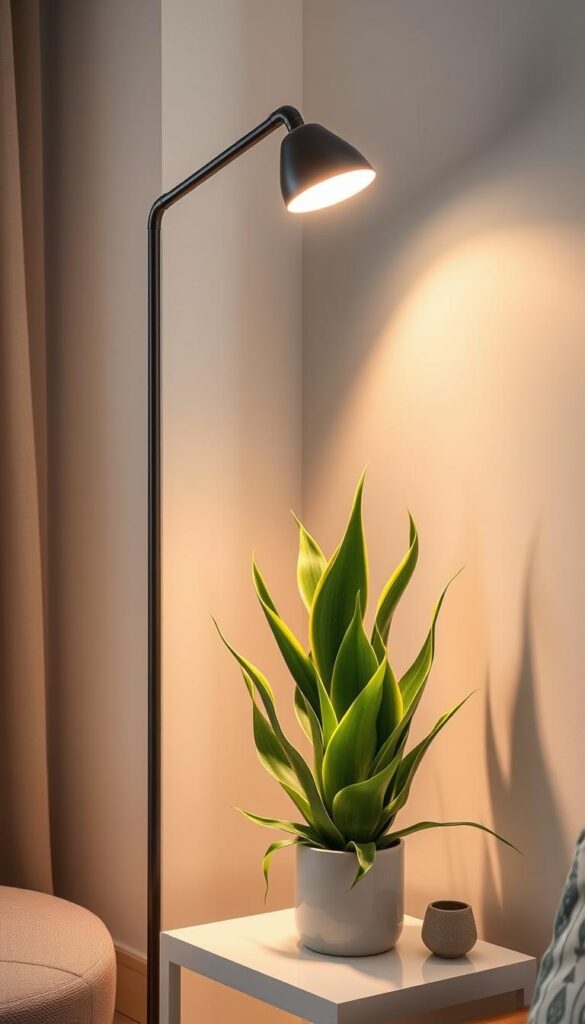
Scarce natural light? LED grow lights fit the spectrum without heat. Position ~12 inches above leaves, 12-14 hours daily. Our thrive in areas with varying light guide covers options.
Seasonal Variations
Light needs shift through the year.
Spring and Summer
Active growth – more indirect sun. I move mine east for ~6 hours. Sheer curtains block peak rays. For comparison, perfect balance matters for monsteras too.
Autumn and Winter
Shorter days mean dormancy. I move to lower light and water less to avoid rot. Mimics the dry season.
| Lighting Option | Benefits | Best Use |
|---|---|---|
| Natural Indirect Sunlight | Promotes vibrant growth | East or southeast-facing windows |
| LED Grow Lights | Consistent light, energy-efficient | Low-light areas or winter months |
| Sheer Curtains | Filters harsh sunlight | Windows with direct sun exposure |
Diagnosing Light Issues
Catch signs early and you’ll save the plant.
Sunburn or Scorching
Too much direct sun discolors or scorches leaves. Reposition to filtered light or add curtains.
Low Light and Leggy Growth
Low light stretches stems and droops leaves. Move brighter or add guide you in adjusting its care with grow lights. (Video: snake plant light tips.)
- Bleached edges = too much sun.
- Leggy, droopy = needs more light.
- Reposition or filter to fix.
Watering and Fertilization With Light
Light drives water and food needs.
Watering by Light Level
Bright light dries faster – water more. Low light – water sparingly. Always finger-test to the first knuckle. Well-draining mix prevents rot.
Fertilization Timing
Spring/summer: balanced water-soluble feed monthly. Low light: halve strength. Skip fall/winter. The natural and artificial light ensures your plant stays healthy with this rhythm.
Creative Placement
The right spot elevates growth and beauty.
Finding the Ideal Spot
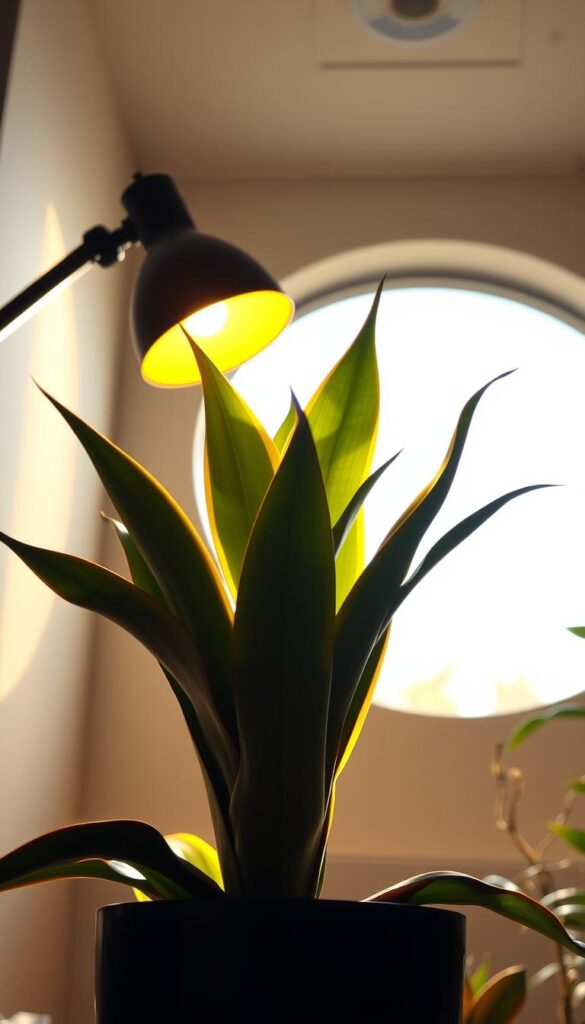
Near a window with indirect light. East/west give gentle sun. Avoid raw south. Low rooms? Supplement with LEDs.
Reflective Surfaces and Curtains
- Windows for indirect sun.
- Sheer curtains filter harsh rays.
- Mirrors bounce light onto the plant.
- Experiment to find the sweet spot.
Expert Tips and Experiences
Over the years I’ve learned what makes mine happy.
My Tried-and-True Setup
- East-facing windows for gentle morning light.
- LED grow lights where natural light is thin.
- Adjust intensity through the day and week.
Small changes boosted growth – and even got one to flower, a rare delight!
| Light Level | Watering Strategy | Fertilization Approach |
|---|---|---|
| Bright Indirect Light | Water every 7-10 days; ensure soil dries between waterings | Fertilize monthly with balanced fertilizer |
| Medium Light | Water every 10-14 days; check soil moisture | Fertilize monthly; adjust strength if necessary |
| Low Light | Water sparingly, allowing soil to dry completely | Fertilize at half strength to prevent root burn |
Snake plants tolerate low light but grow best in bright, indirect sun. They also handle some direct morning light, which intensifies variegation in colored varieties.
The Bottom Line
Snake plants thrive on bright indirect light but tolerate low corners — just avoid deep shade and harsh direct sun. So find a bright spot, give it a shot, and let it ride. 🙂