
Introducing the Philodendron Burle Marx Fantasy
The Burle Marx Fantasy is what happens when a classic favorite gets a quirky makeover — narrower, more elongated leaves with random splashes of cream. It’s compact, climbable, and a bit of a conversation piece.
This Philodendron is easier than its look suggests. Let’s run through the care so you can keep those spotted leaves coming.
What Makes This Plant Special
It’s a sport of the standard Burle Marx, prized for elongated, variably patterned foliage on a tidy climbing frame.
Tropical Roots and Brazilian Heritage
Like its namesake, it hails from Brazilian tropics — warm, humid, and shaded under a canopy. We’re just recreating a slice of that at home.
Adapting to Indoor Life
It settles into normal living rooms well if you nail light and humidity. A houseplant this adaptable is a relief for busy growers.
Key Characteristics and Unique Foliage
The leaves are the whole point, so let’s appreciate them.
Distinctive Leaf Patterns and Colors
- Elongated, pointed leaves with random cream flecks.
- Glossy surface that catches the light nicely.
- A climbing habit that benefits from a pole.
Growth Habit
It stays more compact than many philodendrons, which makes it a great shelf or totem plant. Give it something to climb and the leaves size up.
Light and Temperature Requirements
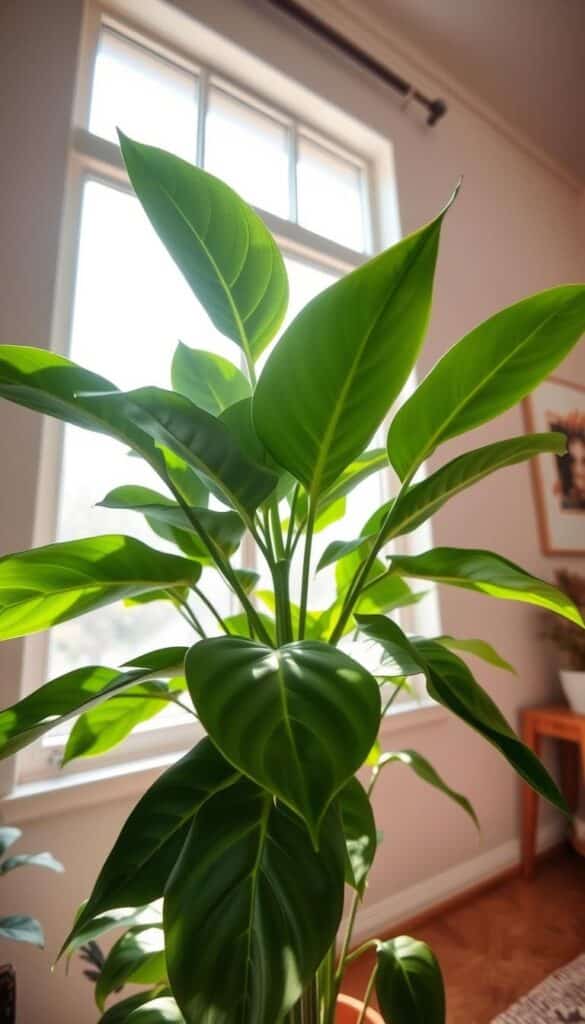
Bright indirect light keeps the variegation bold.
Bright Indirect vs Low Light
In bright indirect light the cream sectors stay prominent; in low light the plant greens out and stretches. An east or filtered window is ideal.
Temperature Preferences
Keep it between 18–29°C (65–85°F). It dislikes cold drafts, so skip the windowsill in winter.
Soil, Watering, and Fertilization
The usual aroid rules apply, just tuned for a smaller root system.
A Well-Draining Soil Mix
Blend potting soil with orchid bark and perlite so water moves through fast. That structure prevents the rot that kills more philodendrons than anything else.
Watering Frequency
Water when the top inch dries — roughly weekly in summer, less in winter. Don’t let it sit in a saucer of water.
Fertilizer for Healthy Growth
A balanced liquid feed at half strength monthly in the growing season is plenty. For a broader indoor feeding plan, our indoor guides help.
Caring in Various Light Conditions
Life isn’t always a bright window, so here’s the adjust-on-the-fly version.
Managing Low Light
If your spot is dim, expect slower growth and less variegation. Rotate the plant weekly so all sides get what light there is.
Pruning Techniques for Enhanced Growth
A light trim keeps it bushy and shows off the leaves.
When and How to Prune
Pinch back leggy stems in spring to encourage branching. Always cut just above a node with clean shears.
Tools and Safety
Sharp, sanitized pruners prevent tearing and disease. Wipe the blades between cuts if the plant looks unwell.
Propagation and Repotting
Making more is satisfying and simple.
Step-by-Step Propagation
Take a node cutting, root it in water or sphagnum, then pot into that airy mix. It’s much like propagating a pothos — easy and quick.
Repotting Tips
Move up one pot size when roots circle the bottom, usually every 1–2 years. Spring is the best time to do it.
Troubleshooting Issues and Pests
Catch problems early and they stay minor.
Overwatering and Underwatering Signs
Yellow, limp leaves signal too much water; crispy edges mean too little. The soil test beats guessing every time.
Effective Pest Control
Spider mites and mealybugs appear in dry air. Boost humidity and treat with neem at the first sign. For more on the plant side of pest ID, that guide is handy.
Complete Burle Marx Fantasy Care Guide
Put it together and the routine is light, humid air, chunky soil, and occasional feed.
Daily and Weekly Routines
- Check soil moisture every few days.
- Mist or humidify to hold 60%+ humidity.
- Wipe leaves to keep them glossy and pest-free.
Placement and Aesthetic Appeal
This one earns a front-row spot.
Best Location in Your Home
A bright bathroom or near a humid kitchen window suits it perfectly. Just keep it off cold glass in winter.
Decor Ideas
Let it climb a moss pole on a plant stand, or trail from a shelf. The spotted leaves look great against plain walls.
Safety and Toxicity Considerations
A quick but important note for households with kids or pets.
Handling and Placement Precautions
Like all philodendrons, it’s toxic if chewed. Place it up high or behind a barrier if you’ve got curious pets or toddlers.
Here’s an unboxing that shows the kind of plant you’re looking for at the shop:
And a straightforward care walkthrough to reinforce the routine.
| Feature | Details |
|---|---|
| Leaf Color | Silver-green with unique markings |
| Growth Habit | Climbing, can grow quite large |
| Care Level | Easy to moderate |
| Feature | Details |
|---|---|
| Origin | Brazilian tropical rainforests |
| Climate | Warm and humid |
| Humidity | 50-70% relative humidity |
| Temperature | 65-75°F (18-24°C) |
| Light | Bright, indirect light |
| Aspect | Recommendation |
|---|---|
| Soil Mix | Peat moss, perlite, orchid bark |
| Watering | Water when top inch of soil is dry |
| Fertilizer | Balanced, water-soluble, half strength |
| Tool | Purpose |
|---|---|
| Sharp Pruning Shears | For cutting stems and leaves |
| Gardening Gloves | To protect your hands from sap and cuts |
| Sanitizer | To clean tools and prevent infection |
| Condition | Signs |
|---|---|
| Overwatering | Yellow leaves, soft stems, root rot |
| Underwatering | Brown leaf edges, crispy texture |
Conclusion
The Burle Marx Fantasy wants bright indirect light, a chunky well-draining mix, and humid air — give it those and the cream-splashed leaves keep appearing. Grab a cutting or a small plant and give it a shot; this compact climber will quickly become the spotted star of your shelf.