
Philodendron Golden Dragon Care Guide: Golden Lobes That Get Wilder as It Climbs
I bought a Philodendron golden dragon for the lobed leaves with golden-green coloration. As it climbs, each new leaf becomes more deeply divided and larger, transforming from a cute seedling into a sculptural specimen. A rewarding indoor climber. 🙂
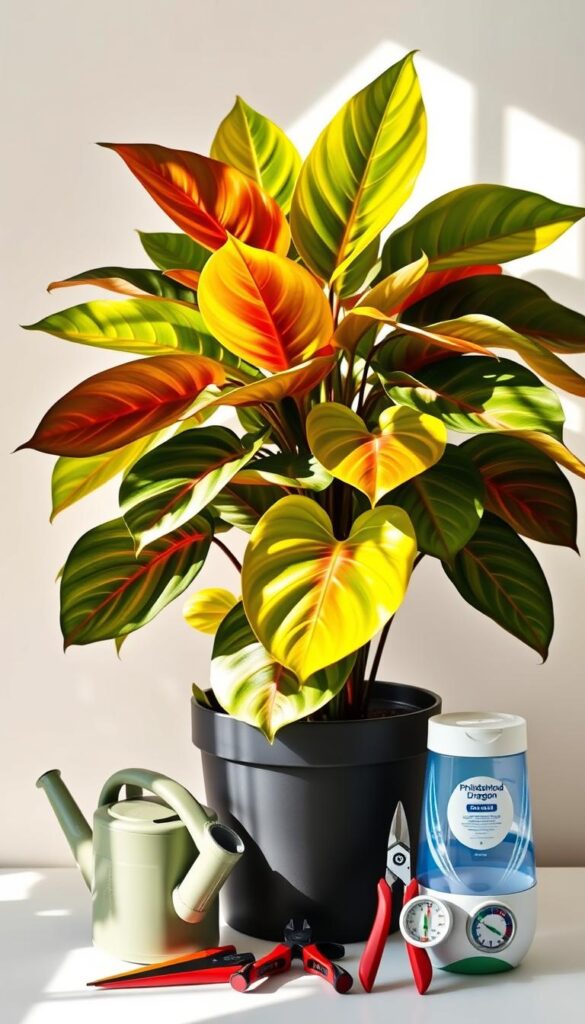
Your Complete Philodendron Golden Dragon Care Plan
- Light: Bright, indirect — drives the gold
- Water: When the top inch dries
- Habit: Climbing; wants a moss pole
Watering and Humidity Essentials
Water when the top inch is dry and keep humidity at 60%+. Watering is one of the most critical aspects of plant care — golden dragon hates soggy roots more than dry spells.
Ideal Lighting and Soil Mix Conditions
Bright, indirect light keeps the golden tones vivid. A chunky bark-perlite mix drains fast. This houseplant climbs eagerly — see climbing plants like the Philodendron for training tips.
Managing Growth and Fertilization Routine
Feed monthly in season to fuel bigger leaves. Watch the plant’s response and adjust — the plant’s responses and adjusting your care approach works here too.
Repotting and Nutrient Replenishment
Repot every 1–2 years, one size up, refreshing the aroid mix so nutrients stay available.
Support Structures and Fertilizer Timing
Add a moss pole early so aerial roots engage. The pole also triggers the mature, deeply lobed leaf form.
Identifying and Troubleshooting Common Concerns
- Plain green new leaves: Not enough light
- Yellow leaves: Overwatering
- Crispy edges: Low humidity
Wrapping Up Your Philodendron Golden Dragon Journey
Give it light, a pole, and patience — the leaves get more dramatic every climb.
The Bottom Line
The Philodendron Golden Dragon care guide is: bright light for the gold, chunky draining soil, humid air, and a moss pole to climb. The payoff is leaves that grow larger and more lobed as it matures. IMO, it’s one of the most rewarding climbing philodendrons for the visual change alone. So bring one home, give it a shot, and watch it transform on the pole. 😉