
Understanding Your Spider Plant’s Unique Needs
My spider plant grew long bare stems with all the leaves bunched at the tips. I started pinching the growing tips and moved it to brighter light, and within two months it filled in along the whole stem.
A bushier spider plant simply means denser, fuller growth that adds texture to a room. This guide shares easy techniques, from pruning to propagation, that need minimal effort. Whether you are a pro or a beginner, you can turn your houseplant into a lush showpiece.
Understanding Your Spider Plant’s Unique Needs
Spider plants win fans with cascading leaves and baby plantlets, but they need the right light, water, and soil to grow dense.
Light, Water, and Soil Essentials
Light is the big one. They tolerate low light but flourish in bright, indirect sun, and plant near an east- or west-facing window is ideal since direct sun scorches. Water thoroughly, then let the top inch dry; use a well-draining mix and skip garden soil that compacts. They are happy as indoor growers when given the right spot.
My Personal Experience
Finding the light-water balance transformed my leggy plant into a fuller one. Switching to a quality potting mix also meant healthier leaves and more plantlets. Small changes, big difference.
How to Make Spider Plant Bushier
Fuller growth comes from a few simple methods focused on light, humidity, and routine.
Optimal Conditions
Bright, indirect light and steady 40-60% humidity do the heavy lifting. A pebble tray or humidifier helps, along with a consistent watering schedule in well-draining soil.
| Optimal Conditions | Non-Optimal Conditions |
|---|---|
| Bright, indirect sunlight | Direct sunlight |
| Consistent humidity (40-60%) | Low humidity |
| Regular watering schedule | Overwatering |
Pruning Techniques for Fuller Growth
Pruning shapes the plant and sparks new growth without much work.
When and How I Prune
I prune every few weeks, cutting brown tips and long leggy stems just above a node with sharp, sterilized scissors to avoid infection.
Optimal Pruning Practices
| Optimal Pruning Practices | Non-Optimal Practices |
|---|---|
| Regular trimming of brown tips | Ignoring brown or damaged leaves |
| Using sterilized, sharp tools | Using dull or unclean tools |
| Trimming at the base to promote new growth | Over-trimming, which can stress the plant |
Clean tools and regular trims keep the plant vibrant and full.
Propagation Strategies to Enhance Density
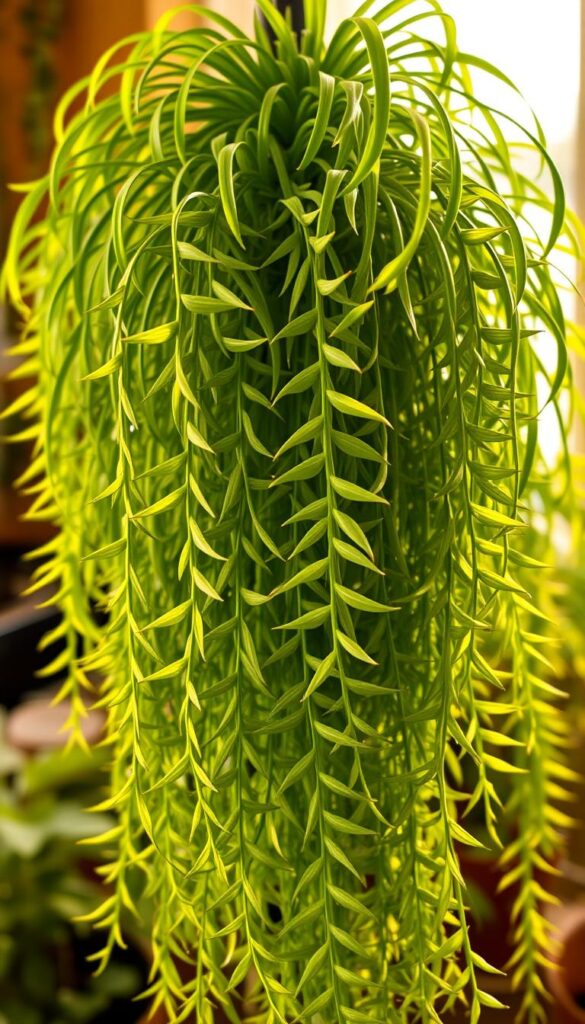
Those baby plantlets (spiderettes) are your secret weapon for density.
Using Spider Plant Babies
Once a baby hits about an inch, clip it with a bit of runner, root it in water or soil, then replant near the mother. It fills gaps and pushes the whole plant denser. plants grow easily this way.
Step-by-Step Propagation Tips
Select a baby at least an inch tall, snip with clean scissors, root in water or well-draining soil, and keep the medium moist until established. Give it light and it will take off.
Repotting: Giving Your Plant Room to Grow
Like any living thing, spider plants need space. Roots at the drainage holes or fast-drying soil means it is time to up-pot.
Signs It’s Time for a New Pot
Root crowding, circling roots, or soil drying faster than usual all signal a bigger container. Go only 1-2 sizes up, use fresh draining soil, and keep those drainage holes.
| Optimal Potting Conditions | Non-Optimal Potting Conditions |
|---|---|
| Well-draining soil with proper drainage holes | Soil that retains too much water |
| A pot that is 1-2 sizes larger than the current one | A pot that is too small or overly large |
| Fresh potting mix to provide necessary nutrients | Reusing old potting mix without refreshment |
Optimal Lighting and Humidity
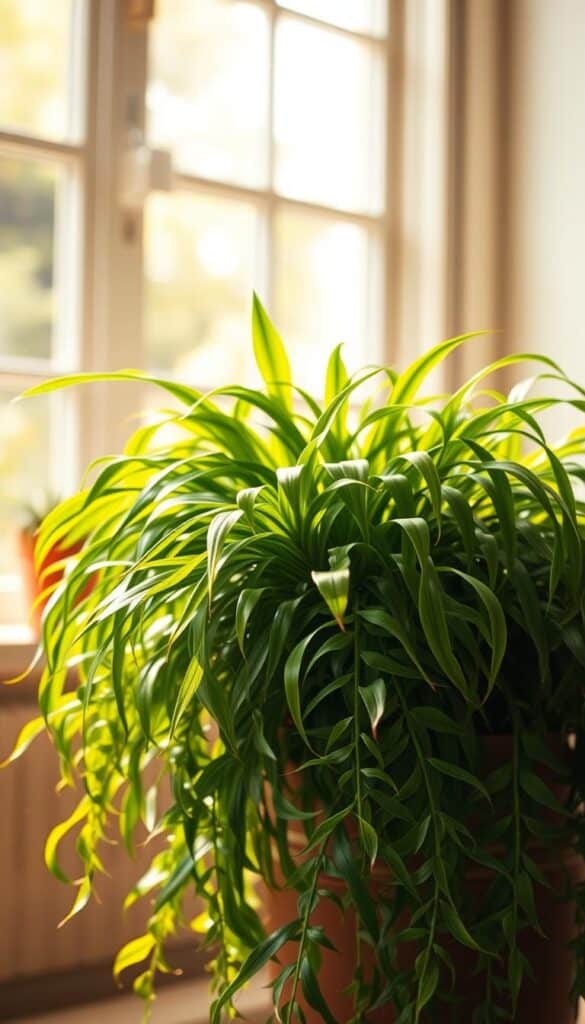
Light and humidity keep leaves vibrant and prevent dry tips.
Benefits of Bright, Indirect Sunlight
Indirect light fuels growth without scorching; I filter sun with sheer curtains. Keep humidity around 40-60% with a humidifier or pebble tray, and ensure good air circulation to dodge fungal issues.
Managing Watering and Soil
Water when the top inch feels dry, about weekly in spring and summer. Check with your finger; if moist, wait a day or two. Well-draining, organic-rich soil prevents root rot, and garden soil is a no-go.
Seasonal Adjustments
In summer I water more often; in cooler months about every 10 days, away from drafts, keeping temps 60-80 degrees. Watch for droop or yellow and adjust.
Quick Fixes: Creative Ways to Boost Bushiness
Want instant density? Plant a few small pre-grown spider plants around the mother’s base. They blend in and fill sparse spots overnight, no special tools required.
Conclusion
Make spider plants bushier by pinching growing tips and increasing light. Remove spent flower stems and root the baby plantlets to start new specimens that fill out faster, and keep them in houseplant thrive conditions with bright, indirect sun. A little pinch here and a baby there goes a long way. Give it a shot! 🌱