
Understanding My Philodendron Pedatum
I bought a Philodendron pedatum after falling for those deeply lobed, oak-leaf-looking leaves. The young form is narrow and solid, but as it climbs each new leaf gets more divided and leathery to the touch.
This Philodendron plant captivates with hand-like lobed leaves and slender, reddish-brown stems. It’s a climber by nature — I train it up a support and it rewards me with healthier growth, a favorite for indoor spaces. Bright indirect light near an east window is its happy place.
Creating the Ideal Environment
Water, soil, drainage, light, temperature, and humidity all have to play nicely. I start with a well-draining mix boosted with perlite or coco coir so the soil never sits wet, and I water by feel — top 1–2 inches dry means go time.
| Factor | Ideal Setup | Benefits |
|---|---|---|
| Soil Mix | Well-draining mix with perlite or coco coir | Prevents waterlogging, promotes healthy roots |
| Watering Routine | Check soil dryness; water when top 1-2 inches are dry | Maintains optimal moisture, prevents root rot |
| Light Placement | Near a south-facing window, indirect sunlight | Provides bright light without direct sun exposure |
| Temperature | 65-75°F (18-24°C) | Mimics natural tropical conditions |
| Humidity | 50-60% | Supports leaf health and growth |
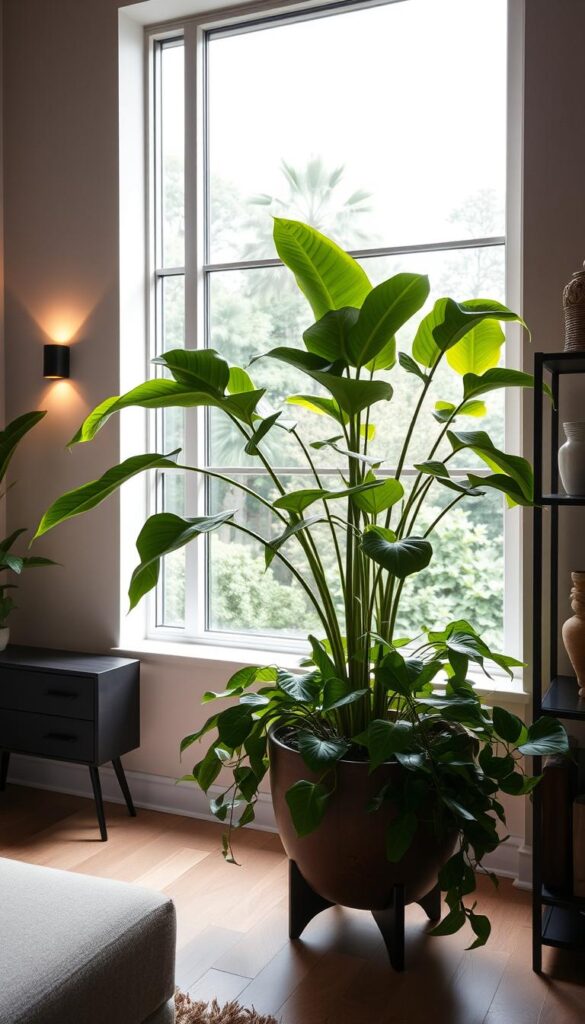
Light-wise, a south window with indirect sun is ideal; direct rays scorch. I keep it 65–75°F and humidity around 50–60% to echo its tropical home.
A Care Guide for Optimal Growth
I check soil with a finger to the first knuckle — dry means water. A can with small holes controls flow and keeps leaves dry to avoid fungus. Spring and summer I water every 7–10 days; fall and winter, less.
- Use a water calculator tuned to pot size and soil.
- Keep water off the leaves to dodge fungal disease.
- Let the pot drain fully so nothing pools.
I repot every spring with fresh, well-draining soil and skip extra fertilizer — new mix is enough. That keeps the foliage lush without burn.
Propagation and Troubleshooting
Stem cuttings or air layering both work. For cuttings, take a node-bearing stem, plant it in moist mix; for air layering, wrap a moist medium around a stem section until roots form. Yellow or brown leaves usually mean overwatering — check the soil and ease off. Spider mites? Isolate and treat with insecticidal soap.
- Check soil moisture often to prevent root rot.
- Isolate at the first sign of pests.
- Adjust watering with the seasons.
Seasonal and Advanced Care
In winter the plant slows down, so I drop to about 0.25 cups every 12 days — just enough to avoid rot. Root rot loves winter, so drainage is non-negotiable; trim any soft, yellowing growth and inspect the roots.
| Season | Watering Adjustment | Benefits |
|---|---|---|
| Winter | Water every 12 days with 0.25 cups | Prevents root rot, matches slower growth |
| Summer | Water every 9 days with 0.5 cups | Supports active growth, maintains moisture |
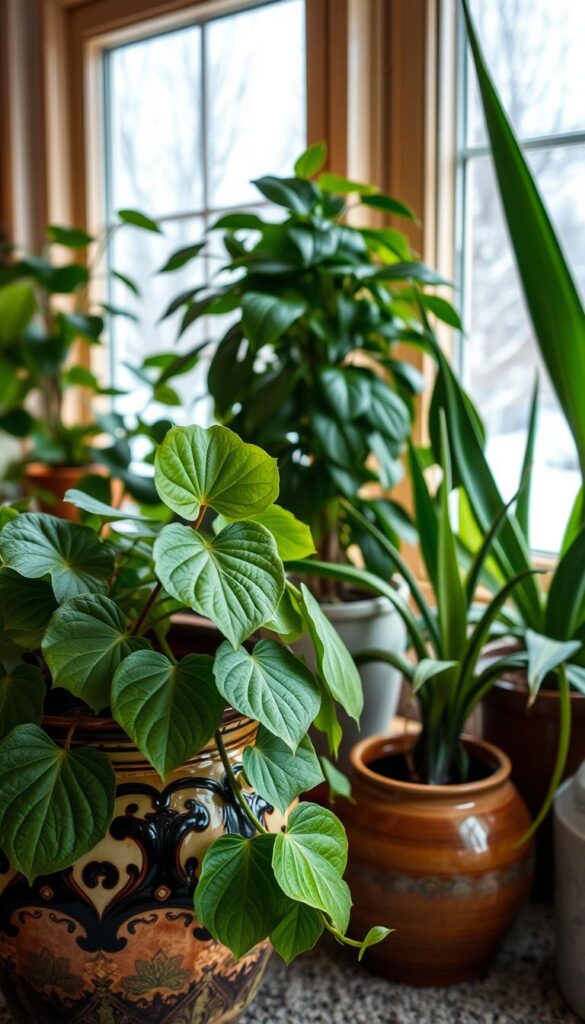
For a deeper guide my care on a similar climber, the Ficus drupacea write-up is a handy companion read.
Conclusion
Philodendron pedatum needs bright, indirect light and a moss pole to climb for those mature lobed leaves. Keep soil lightly moist in the growing season and ease off in winter. Consistent attention beats perfection — give it a shot! 🌿